Serving with Faith & Love - Ephesians 2:10

Faith in Action: Taking the First Step
Martin Luther King Jr.
Honoring Black Roots - September 2025

Emancipation Impact - Sept 22, 1862

Historic Black Assembly
1830s Black Convention: A Landmark Gathering

Jim Brown's Enduring Legacy
Jim Brown: A Legendary Trailblazer

Saluting Abner Haynes
Honoring a Football Trailblazer

Stephen Biko's Fight for Justice
Bantu Stephen Biko OMSG (18 December 1946 – 12 September 1977) was a South African anti-apartheid activist. Ideologically an African nationalist and African socialist, he was at the forefront of a grassroots anti-apartheid campaign known as the Black Consciousness Movement during the late 1960s and 1970s. His ideas were articulated in a s
Bantu Stephen Biko OMSG (18 December 1946 – 12 September 1977) was a South African anti-apartheid activist. Ideologically an African nationalist and African socialist, he was at the forefront of a grassroots anti-apartheid campaign known as the Black Consciousness Movement during the late 1960s and 1970s. His ideas were articulated in a series of articles published under the pseudonym Frank Talk. Raised in a poor Xhosa family, Biko grew up in Ginsberg township in the Eastern Cape. In 1966, he began studying medicine at the University of Natal, where he joined the National Union of South African Students (NUSAS). Strongly opposed to the apartheid system of racial segregation and white-minority rule in South Africa, Biko was frustrated that NUSAS and other anti-apartheid groups were dominated by white liberals, rather than by the blacks who were most affected by apartheid. He believed that well-intentioned white liberals failed to comprehend the black experience and often acted in a paternalistic manner. He developed the view that to avoid white domination, black people had to organise independently, and to this end he became a leading figure in the creation of the South African Students' Organisation (SASO) in 1968. Membership was open only to "Blacks", a term that Biko used in reference not just to Bantu-speaking Africans but also to Coloureds and Indians. He was careful to keep his movement independent of white liberals, but opposed anti-white hatred and had white friends. The white-minority National Party government were initially supportive, seeing SASO's creation as a victory for apartheid's ethos of racial separatism.
Influenced by the Martinican philosopher Frantz Fanon, Biko and his compatriots developed Black Consciousness as SASO's official ideology. The movement campaigned for an end to apartheid and the transition of South Africa toward universal suffrage and a socialist economy. It organised Black Community Programmes (BCPs) and focused on the psychological empowerment of black people. Biko believed that black people needed to rid themselves of any sense of racial inferiority, an idea he expressed by popularizing the slogan "black is beautiful". In 1972, he was involved in founding the Black People's Convention (BPC) to promote Black Consciousness ideas among the wider population. The government came to see Biko as a subversive threat and placed him under a banning order in 1973, severely restricting his activities. He remained politically active, helping organise BCPs such as a healthcare centre and a crèche in the Ginsberg area. During his ban he received repeated anonymous threats, and was detained by state security services on several occasions. Following his arrest in August 1977, Biko was beaten to death by state security officers. Over 20,000 people attended his funeral. Biko's fame spread posthumously. He became the subject of numerous songs and works of art, while a 1978 biography by his friend Donald Woods formed the basis for the 1987 film Cry Freedom. During Biko's life, the government alleged that he hated whites, various anti-apartheid activists accused him of sexism, and African racial nationalists criticised his united front with Coloureds and Indians. Nonetheless, Biko became one of the earliest icons of the movement against apartheid, and is regarded as a political martyr and the "Father of Black Consciousness". His political legacy remains a matter of contention. National Prosecuting Authority set to open an inquest into the death of Black Consciousness Movement Steve Biko.

Gen. Daniel 'Chappie' James - Pioneering Leader
On September 1, 1975, General Daniel "Chappie" James Jr. became the first African American to achieve the rank of four-star general in the U.S. Air Force and was assigned as Commander in Chief of the North American Air Defense Command (NORAD). A decorated pilot and Tuskegee Airman, James's promotion to four-star general after a distinguis
On September 1, 1975, General Daniel "Chappie" James Jr. became the first African American to achieve the rank of four-star general in the U.S. Air Force and was assigned as Commander in Chief of the North American Air Defense Command (NORAD). A decorated pilot and Tuskegee Airman, James's promotion to four-star general after a distinguished career in three wars was a historic milestone for both the military and the nation. Details of the Appointment
- Rank: Four-star general.
- Position: Commander in Chief of NORAD.
- Significance: First African American to reach the four-star rank in the U.S. military.
Career Highlights Leading to the Promotion
- Tuskegee Airman: James trained pilots during World War II as part of the all-African American 99th Pursuit Squadron.
- Combat Missions: He flew 101 combat missions in the Korean War and 78 missions in the Vietnam War, during which his flight group destroyed seven Communist MiG-21s.
- Leadership Roles: After returning from Korea, James held various leadership positions within the U.S. Air Force.
- Patriotic Speeches: He was also known for his widely regarded speeches on patriotism and the American way.
After the Promotion
- NORAD Command: In his role as Commander in Chief of NORAD, he had operational command of all U.S. and Canadian strategic aerospace defense forces.
- Service End: General James served as special assistant to the Air Force Chief of Staff until his retirement in early 1978, shortly before his death.

Carter G. Woodson & Black History
On September 9, 1915, not September 15, Carter G. Woodson and Jesse E. Moorland founded the Association for the Study of African American Life and History (ASALH) in Chicago. Woodson, the "Father of Black History," also established the Negro History Week in 1926, which evolved into the current Black History Month.
b) Carter G. Woodson's W
On September 9, 1915, not September 15, Carter G. Woodson and Jesse E. Moorland founded the Association for the Study of African American Life and History (ASALH) in Chicago. Woodson, the "Father of Black History," also established the Negro History Week in 1926, which evolved into the current Black History Month.
b) Carter G. Woodson's Work and Legacy
c) Founding of ASALH:
d) On September 9, 1915, Woodson and Jesse E. Moorland founded the Association for the Study of African American Life and History (ASALH). ASALH's mission was to promote, research, preserve, interpret, and disseminate information about African American history and culture.
e) Black History Month:
f) In 1926, Woodson initiated Negro History Week, which was a precursor to the modern Black History Month. This annual celebration is dedicated to honoring the contributions and achievements of African Americans and fostering a deeper understanding of their role in shaping the nation.
g) Academic Contributions:
h) Woodson held a Harvard PhD in history and was dedicated to elevating the study of African American history. He founded ASALH and also published a scholarly journal to further his mission.
i) Mentorship:
j) He served as a mentor to numerous young Black scholars and historians, fostering the development of future generations of Black historians.
k) Impact on Education:
l) Woodson's work was crucial in bringing the study of Black history into schools and colleges, inspiring educators and school boards to develop curricula on the subject.

Vanessa Williams: Breaking Barriers
On September 3, 1901, Alabama adopted a new state constitution that prohibited interracial marriage and mandated separate schools for Black and white children. The state constitutional convention’s primary purpose was to legally disenfranchise Black voters, and the new constitution also included several electoral policies designed to supp
On September 3, 1901, Alabama adopted a new state constitution that prohibited interracial marriage and mandated separate schools for Black and white children. The state constitutional convention’s primary purpose was to legally disenfranchise Black voters, and the new constitution also included several electoral policies designed to suppress Black political power.
Framers of this constitution knew that, because the Fourteenth Amendment prohibited race-based disenfranchisement, discriminatory constitutional provisions intended to maintain white supremacy had to appear race-neutral. To that end, the new constitution called for the appointment of three registrars from each county who had wide discretion when accepting registration applications and were chosen and trained to minimize registration by African Americans.
The constitution’s new registration rules also required voters to be able to read and write any section of the U.S. Constitution and to have been lawfully employed for the previous 12 months. Anyone who did not meet the employment specification could still register if he or his wife had real estate and possessions taxed at $300. Though these requirements would have severely limited the voting rights of African Americans and poor white people in Alabama, the constitutional drafters provided exceptions that allowed voters to register anyway if they were voters, descendants of voters, or could demonstrate an understanding of the U.S. Constitution. This provision offered a loophole much more likely to apply to white men (who had been eligible for military service in the South). The effect was intentional.
Alabama was home to approximately 75,000 registered African American voters before the new constitution was enacted, but drafters estimated the new rules would reduce that number to less than 30,000. Alabama delegates approved the constitution 132-12. Since then, the state has amendemes, but several of the discriminatory provisions of the 1901 constitution—including the mandate to maintain racially segregated public schools—remained until 2022.

Bible Trivia & Lessons
On September 17, 1983, Vanessa Williams became the first Black woman to be crowned Miss America. Though her reign was cut short by the unauthorized publication of nude photos in Penthouse magazine, she went on to have a highly successful career as a singer, actress, and producer, becoming the most successful Miss America in history.
Key
On September 17, 1983, Vanessa Williams became the first Black woman to be crowned Miss America. Though her reign was cut short by the unauthorized publication of nude photos in Penthouse magazine, she went on to have a highly successful career as a singer, actress, and producer, becoming the most successful Miss America in history.
Key Events
· September 17, 1983:
Vanessa Williams was crowned Miss America 1984, making her the first African-American woman to hold the title.
· July 23, 1984:
Williams resigned her title after nude photographs were published in Penthouse without her consent. She was succeeded by the first runner-up, Suzette Charles.
Williams' Legacy
· Historic achievement:
Her win was a significant moment for Black women in pageantry and beyond.
· Resilience and success:
Despite the controversy, Williams forged a legendary career in entertainment, achieving success as a singer and actress.
· Talent and recognition:
She has received numerous awards and nominations, including Grammy Awards and Emmy Awards, and has a star on the Hollywood Walk of Fame.
· Lasting impact:
Williams' experience opened doors for future generations and remains a powerful story of resilience in the face of adversity.
Our Faith & Community
According to the Gospel of John, the second miracle Jesus performed was healing a royal official's dying son from a distance, which is described in John 4:46-54. This miracle, also known as the healing of the nobleman's son, happened in Cana, near where he had previously performed his first miracle.
The second talking animal in the Bible,
According to the Gospel of John, the second miracle Jesus performed was healing a royal official's dying son from a distance, which is described in John 4:46-54. This miracle, also known as the healing of the nobleman's son, happened in Cana, near where he had previously performed his first miracle.
The second talking animal in the Bible, appearing after the serpent in Genesis, is the donkey of Balaam in the book of Numbers chapter 22. In this account, God opens the donkey's mouth so that it can speak to the prophet Balaam, rebuking him for striking it.
Honoring Black Heritage - August 2025

Robinson & Rickey's Historic Meeting
On August 28, 1945, Branch Rickey met with Jackie Robinson to plan baseball's integration. Rickey tested Robinson's character under racial stress, and Robinson's poised response proved he was the right person to break the color barrier, transforming professional sports.

First Africans Arrive in Jamestown
On August 20, 1619, the first Africans arrived in Jamestown, marking the beginning of Black presence in America. They were initially considered indentured servants, but their arrival set the stage for centuries of slavery and struggle.
The Tragic Life of Emmett Till
The Tragic Life of Emmett Till
Emmett Till's tragic death in 1955, after being brutally murdered at age 14 in Mississippi, became a catalyst for the Civil Rights Movement by exposing the brutal realities of racial violence and injustice.
Motown's Breakthrough Hit
The Tragic Life of Emmett Till
On August 21, 1961, The Marvelettes' 'Please Mr. Postman' became Motown's first #1 hit, marking a pivotal moment in music history that launched the label's legendary success.

March on Washington
On August 28, 1963, more than a quarter million people participated in the historic March on Washington for Jobs and Freedom, gathering near the Lincoln Memorial.
More than 3,000 members of the press covered this historic march, where Rev. Dr. Martin Luther King, Jr. delivered the exalted "I Have a Dream" speech.
Originally conceived by ren
On August 28, 1963, more than a quarter million people participated in the historic March on Washington for Jobs and Freedom, gathering near the Lincoln Memorial.
More than 3,000 members of the press covered this historic march, where Rev. Dr. Martin Luther King, Jr. delivered the exalted "I Have a Dream" speech.
Originally conceived by renowned labor leader A. Phillip Randolph and Roy Wilkins, Executive Secretary of the NAACP, the March on Washington evolved into a collaborative effort amongst major civil rights groups and icons of the day.
Stemming from a rapidly growing tide of grassroots support and outrage over the nation's racial inequities, the rally drew over 260,000 people from across the nation.
Celebrated as one of the greatest — if not the greatest — speech of the 20th century, Dr. King's celebrated speech, "I Have a Dream," was carried live by television stations across the country. You can read the full speech and watch a short film, below.
In 1941, A. Phillip Randolph first conceptualized a "march for jobs" in protest of the racial discrimination against African Americans from jobs created by WWII and the New Deal programs created by President Franklin D. Roosevelt.
The march was stalled, however, after negotiations between Roosevelt and Randolph prompted the establishment of the Fair Employment Practice Committee (FEPC) and an executive order banning discrimination in defense industries.
The FEPC dissolved just five years later, causing Randolph to revive his plans. He looked to the charismatic Dr. King to breathe new life into the march. A quarter-million people strong, the march drew activists from far and wide. Leaders of the six prominent civil rights groups at the time joined forces in organizing the march. The group included Randolph, leader of the Brotherhood of Sleeping Car Porters; Wilkins, Executive Secretary of the NAACP; Dr. King, Chairman of the SCLC; James Farmer, founder of the Congress of Racial Equality (CORE); John Lewis, President of the Student Nonviolent Coordinating Committee (SNCC); and Whitney Young, Executive Director of the National Urban League.
Dr. King, originally slated to speak for 4 minutes, went on to speak for 16 minutes, giving one of the most iconic speeches in history.

MLK's Dream Speech
"I Have a Dream" is a public speech that was delivered by American civil rights activist and Baptist minister Martin Luther King Jr. during the March on Washington for Jobs and Freedom on August 28, 1963. In the speech, King called for civil and economic rights and an end to racism in the United States. Delivered to over 250,000 civil rig
"I Have a Dream" is a public speech that was delivered by American civil rights activist and Baptist minister Martin Luther King Jr. during the March on Washington for Jobs and Freedom on August 28, 1963. In the speech, King called for civil and economic rights and an end to racism in the United States. Delivered to over 250,000 civil rights supporters from the steps of the Lincoln Memorial in Washington, D.C., the speech was one of the most famous moments of the civil rights movement and among the most iconic speeches in American history. Beginning with a reference to the Emancipation Proclamation, which declared millions of slaves free in 1863, King said: "one hundred years later, the Negro still is not free". Toward the end of the speech, King departed from his prepared text for an improvised peroration on the theme "I have a dream". In the church spirit, Mahalia Jackson lent her support from her seat behind him, shouting, "Tell 'em about the dream, Martin!" just before he began his most famous segment of the speech. Taylor Branch writes that King later said he grasped at the "first run of oratory" that came to him, not knowing if Jackson's words ever reached him. Jon Meacham writes that, "With a single phrase, King joined Jefferson and Lincoln in the ranks of men who've shaped modern America". The speech was ranked the top American speech of the 20th century in a 1999 poll of scholars of public address. The speech has also been described as having "a strong claim to be the greatest in the English language of all time".

Black August & August 28
One day in 1946, a black woman showed up at the Vogue School of Modeling in New York, seeking to learn the trade. Her arrival caused a stir. The nascent modeling industry was as deeply segregated as America was then, and she was turned away. At the time, the Vogue School of Modeling did not accept black women. Or so it thought.
Unknown to
One day in 1946, a black woman showed up at the Vogue School of Modeling in New York, seeking to learn the trade. Her arrival caused a stir. The nascent modeling industry was as deeply segregated as America was then, and she was turned away. At the time, the Vogue School of Modeling did not accept black women. Or so it thought.
Unknown to the school, one was already enrolled: Ophelia DeVore-Mitchell. And she had no idea that Vogue was unaware. “I thought they knew what I was,” DeVore-Mitchell would tell Ebony magazine years later. She had not lied to get in; she was so light-skinned that no one thought to ask. She passed inadvertently. But, if she was harboring a secret intentionally, it was this: DeVore-Mitchell was learning not only how to model but also how to run a school like Vogue. She wanted to take what she was learning to young women in her community, because she believed that the poise and comportment that goes along with modeling also commands respect. “That wasn’t my mission, to be a model,” she said, it “was to have us presented in a way that was not stereotyped.”
Years before “black is beautiful” became a rallying cry, DeVore-Mitchell understood the value of using aesthetics to undermine racist attitudes. While she knew black models would be helpful for selling things to a growing black consumer class, she also felt that they could help send the message that African physiognomy is just as beautiful as any, and thus help communicate to the world that black bodies are valuable, important and precious. She saw modeling as a way to make a difference. “It was the vehicle that I used to communicate a positive image of my people,” she said. “I wanted everybody to be accepted as human beings.”
In 1946 DeVore-Mitchell started the Grace Del Marco modeling agency in New York. Two years later, she opened the Ophelia DeVore School of Self-Development and Modeling, where she taught thousands of students etiquette, poise, posture, speech and ballet — and beyond that, how to carry themselves in a regal way, how to look people in the eye, how to enter a room and, above all, how to believe in themselves. Prominent black women like Diahann Carroll, Cicely Tyson and Susan Taylor all passed through her orbit, and their dignity and allure testify to DeVore-Mitchell’s talents as an instructor and mentor. Building black self-esteem and a deep appreciation for black aesthetics would be crucial to the civil rights movement, the Black Arts movement and the Black Power movement. But before they were born, DeVore-Mitchell was teaching the world to see black beauty.
Abolition of Slavery in UK
Black August and why August 28 is a major date in Black History. Black August began in California’s San Quentin prison by the inmates who wished to commemorate the rich, tragic history of prison protest over the past decade; as well as the number of historically significant evets in the black freedom struggles that have taken place in the month of August.

Slavery Abolished in the United Kingdom (1833) –
Slavery Abolished in the United Kingdom (1833) –
Slavery Abolished in the United Kingdom (1833) –
The Slavery Abolition Act of 1833 was a British law that abolished slavery throughout most of the British Empire. It received Royal Assent on August 28, 1833, and came into force on August 1, 1834. The act freed over 800,000 enslaved Africans in the Caribbean and South Africa, as well as a small number in Canada. While it aimed to end sla
The Slavery Abolition Act of 1833 was a British law that abolished slavery throughout most of the British Empire. It received Royal Assent on August 28, 1833, and came into force on August 1, 1834. The act freed over 800,000 enslaved Africans in the Caribbean and South Africa, as well as a small number in Canada. While it aimed to end slavery, it also included provisions for compensation to slave owners and a system of "apprenticeship" for formerly enslaved people. Key Provisions: Emancipation: The act declared the emancipation of all slaves in the British colonies, except for those held by the East India Company, Ceylon (Sri Lanka), and Saint Helena. Compensation: Slave owners were compensated for the loss of their "property" with a substantial sum of £20 million, a large portion of the government's expenditure at the time. Apprenticeship: Instead of immediate freedom for all, those over the age of six were designated as "apprentices," essentially unpaid laborers, for a period of four to six years. This system was intended to gradually prepare them for full freedom and ensure a smooth transition for plantation owners.
Celebrating Black Heritage - July 2025

Douglass' 1852 Speech
Frederick Douglass' 1852 Address on July 5 critiques the celebration of independence amid slavery's hypocrisy. Highlights include the contrast between American ideals and reality, calling for justice and equality.
Tuskegee's Legacy
Founded on July 4, 1881, Tuskegee grew from humble beginnings under Booker T. Washington's leadership, emphasizing vocational training and self-reliance, becoming a symbol of progress for African Americans.

Dr. Williams' Heart Surgery
Dr. Daniel Hale Williams performed the first successful open-heart surgery in 1893, and founded Provident Hospital, paving the way for Black excellence in medicine and healthcare equality.
Althea Gibson's Tennis Triumphs
Althea Gibson broke barriers in tennis, becoming the first Black player to compete at Wimbledon and to win Grand Slam titles, inspiring generations.

Joseph Rainey's Historic Service
Joseph Rainey made history as the first African American to serve in the U.S. House, breaking barriers and inspiring future generations of leaders.

Admiral Gravely's Historic Achievements
Admiral Gravely broke racial barriers in the U.S. Navy, becoming the first African American to command ships and reach vice admiral rank, paving the way for future leaders.

Joachim Pease: Civil War Hero
Joachim Pease was a Civil War hero and Medal of Honor recipient whose bravery on the USS Kearsarge during the Battle of Cherbourg exemplifies courage in wartime.

Bill Richmond: Boxing Pioneer
Bill Richmond was an enslaved man who gained freedom and became a trailblazing boxer in England, breaking racial barriers in the sport.
Honoring Our Black Heritage
Celebrating Black Music Legends
The NAACP and Other Pioneers in Black Music

Remembering the Chicago Race Riots
A Historical Reflection on Racial Violence in Chicago
Honoring Dr. Bernard Harris
Trailblazing African American Astronaut

Pioneering Judge Jane Bolin
Judge Bolin: A Trailblazer in Law and Justice

Celebrating Rev. Jesse Jackson
Celebrating Rev. Jesse Jackson
Rev. Jesse Jackson: A Civil Rights Legend
Celebrating Our Heritage - June 2025
Remembering Effie Ellis
Effie O'Neal Ellis (1913 –1994) was an American pediatrician, child medical care consultant, and an activist for infant health and maternal education. Ellis was the first African American woman to hold an executive position in the American Medical Association. In 1989, Ellis was inducted into the Chicago Women's Hall of Fame for her effor
Effie O'Neal Ellis (1913 –1994) was an American pediatrician, child medical care consultant, and an activist for infant health and maternal education. Ellis was the first African American woman to hold an executive position in the American Medical Association. In 1989, Ellis was inducted into the Chicago Women's Hall of Fame for her efforts in improving the lives of the black community and helping to lower infant mortality rates. Ellis was born in Hawkinsville, Georgia, Georgia to Joshua P. O'Neal and Althea (Hamilton) O'Neal. In 1933, she obtained her bachelor’s degree in biology and chemistry upon graduating from Spelman College. Ellis then attended graduate school at Atlanta University where she acquired a master's degree in biology in 1935. In 1950 Ellis graduated from the University of Illinois College of Medicine where she graduated with honors and fifth in her class. Following graduate school, she was presented with a grant to study diseases and parasites in Puerto Rico, which prompted her passion for healthcare for all socioeconomic backgrounds. Ellis served as a pediatric residency at Massachusetts General Hospital from 1951 to 1952. Her primary concerns were with the black community, children, and child mortality rates. She aided in the development of parenting and education programs for March of Dimes. She dedicated much of her treating and advising to new and expecting mothers. Ellis obtained a postdoctoral fellowship studying pediatric cardiology at Johns Hopkins University School of Medicine from July 1, 1952, to June 30, 1953. She was a specialist in maternal, prenatal, postnatal, and preventative health care. Her team helped to develop the technique to help save blue babies (those infants with inadequate oxygen supply). In 1970 Ellis became the first African American woman to hold an executive position in the American Medical Association, which she held for five years. She became the Director of Maternal Care and Health Care for Ohio's Department of Health in 1960. In 1970, Ellis was appointed to the President's Committee on the Handicapped. Ellis was inducted into the Chicago Women's Hall of Fame in 1989.
Honoring Bessie Coleman
Elizabeth Coleman (January 26, 1892 – April 30, 1926) was an early American civil aviator. She was the first African American woman and the first Native American to hold a pilot's license and is the earliest known Black person to earn an international pilot's license. She earned her license from the Fédération Aéronautique Internationale
Elizabeth Coleman (January 26, 1892 – April 30, 1926) was an early American civil aviator. She was the first African American woman and the first Native American to hold a pilot's license and is the earliest known Black person to earn an international pilot's license. She earned her license from the Fédération Aéronautique Internationale on June 15, 1921
Born to a family of sharecroppers in Texas, Coleman worked in the cotton fields at a young age while also studying in a small, segregated school. She attended one term of college at Langston University. Coleman developed an early interest in flying, but African Americans, Native Americans, and women had no flight training opportunities in the United States, so she saved and obtained sponsorships in Chicago to go to France for flight school.
She then became a high-profile pilot in notoriously dangerous air shows in the United States. She was popularly known as "Queen Bess" and "Brave Bessie” and hoped to start a school for African American fliers. Coleman died in a plane crash in 1926. Her pioneering role was an inspiration to early pilots and to the African American and Native American communities.
On April 30, 1926, Coleman was in Jacksonville, Florida. She had recently purchased a Curtiss JN-4 (Jenny) in Dallas. Her mechanic and publicity agent, 24-year-old William D. Wills, flew the plane from Dallas in preparation for an airshow and had to make three forced landings along the way because the plane had been so poorly maintained. Upon learning this, Coleman's friends and family did not consider the aircraft safe and implored her not to fly it, but she refused. On take-off, Wills was flying the plane with Coleman in the other seat. She was planning a parachute jump for the next day and was unharnessed as she needed to look over the side to examine the terrain.
About ten minutes into the flight, the plane unexpectedly went into a dive and then a spin at 3,000 feet above the ground. Coleman was thrown from the plane at 2,000 ft (610 m) and was killed instantly when she hit the ground. Wills was unable to regain control of the plane, and it plummeted to the ground. He died upon impact. The plane exploded, bursting into flames. Although the wreckage of the plane was badly burned, it was later discovered that a wrench used to service the engine had jammed the controls. Coleman was 34 years old
Funeral services were held in Florida, before her body was sent back to Chicago. While there was little mention in most media, news of her death was widely carried in the African American press. Ten thousand mourners attended her ceremonies in Chicago, which were led by activist Ida B. Wells.
Celebrating Shirley Chisholm
Shirley Chisolm visits Governor George Wallace (1972) Rep. Shirley Chisholm, the first Black woman elected to the United States Congress, visits Alabama Governor George Wallace, perhaps the single most famous supporter of racial segregation in modern history, as he recovers from an assassination attempt on June 8, 1972. The two were both
Shirley Chisolm visits Governor George Wallace (1972) Rep. Shirley Chisholm, the first Black woman elected to the United States Congress, visits Alabama Governor George Wallace, perhaps the single most famous supporter of racial segregation in modern history, as he recovers from an assassination attempt on June 8, 1972. The two were both seeking the Democratic Party’s nomination for president. Wallace won the governorship on a platform of “segregation now, segregation tomorrow, segregation forever,” and rose to national prominence in 1963 when he appeared on the steps of the University of Alabama to block Black students from attending. He won five Southern states as a third-party candidate in the 1968 presidential election, promising to end the federal government’s attempts at desegregation. Chisholm, who began her career as an early-childhood educator before entering politics, won her Bedford-Stuyvesant seat the same year, presenting herself as “Unbought and unbossed.” Chisholm’s campaign was a long shot—she would later state that her Democratic colleagues refused to take her seriously because she was a woman—but Wallace’s prospects looked decent until he was shot five times at a campaign stop in Laurel, Maryland on May 15, 1972, leaving him permanently paralyzed.
Music that Changed the World
Ain’t Nothing Like the Real Thing topped the billboard charts (1968); - Diana Ross & The Supremes Join The Temptations is, as the title implies, a collaborative album combining Motown's two best-selling groups, Diana Ross & the Supremes and The Temptations. Issued by Motown in late 1968 to coincide with the broadcast of the Supremes/Tem
Ain’t Nothing Like the Real Thing topped the billboard charts (1968); - Diana Ross & The Supremes Join The Temptations is, as the title implies, a collaborative album combining Motown's two best-selling groups, Diana Ross & the Supremes and The Temptations. Issued by Motown in late 1968 to coincide with the broadcast of the Supremes/Temptations TCB television special, the album was a success, reaching #2 on the Billboard 200. Originally the lead single was to have been "The Impossible Dream" as featured in the climax to the TV spectacular TCB. However, it was decided to release "I'm Gonna Make You Love Me" as a single instead even though it wasn't featured on TCB. This became a number-two hit on both the Billboard Hot 100 and the R&B singles chart, and the follow-up, "I'll Try Something New", was a Top 30 hit. “Ain’t Nothing Like the Real Thing”, hit the billboard top of the charts in 1968. A third single, "I Second That Emotion", was released exclusively in the United Kingdom, where it became a Top 20 hit. Diana Ross & the Supremes Join the Temptations marks the first on-record appearance of new Temptations lead singer Dennis Edwards, who was brought in as David Ruffin's replacement in July 1968. All of the tracks on the album are covers of songs for other artists. Both "I Second That Emotion" and "I'll Try Something New" were originally recorded by Motown's Smokey Robinson & the Miracles, while "I'm Gonna Make You Love Me" was an outside hit for Dee Dee Warwick before it became a hit for the Supremes and Temptations. Motown's Marvin Gaye had previously had hits with "Try It Baby" and, as a duet with Tammi Terrell, "Ain't No Mountain High Enough". "This Guy's in Love with You" was a hit for Herb Alpert & the Tijuana Brass , while "Funky Broadway" had been recorded as a hit for Wilson Pickett. The Sweet Inspirations' signature song, "Sweet Inspirations", is also covered here, as is Stevie Wonder's "A Place in the Sun", The Four Tops' "Then", and the show tune "The Impossible Dream" from Man of La Mancha. Frank Wilson served as executive producer of the project. Diana Ross & the Supremes Join the Temptations, joint-recorded at both the main Hitsville USA studio in Detroit, Michigan, the Golden World studio in Detroit, and satellite studios in Los Angeles, primarily features leads by
Diana Ross of the Supremes and Eddie Kendricks of The Temptations, with additional leads by Temptations Dennis Edwards, Paul Williams, Otis Williams, and Melvin Franklin.
Music That Moved Us
Freedom Riders (1961) - Freedom Riders Stokely Carmichael, Gwendolyn Green, and Joan Trumpauer Mulholland were arrested, on June 8, 1961, along with Jan Triggs, Rev. Robert Wesby, Helen Wilson, Terry Perlman, Jane Rosett, and Travis Britt. They had traveled from New Orleans, Louisiana to Jackson, Mississippi, where they were arrested and
Freedom Riders (1961) - Freedom Riders Stokely Carmichael, Gwendolyn Green, and Joan Trumpauer Mulholland were arrested, on June 8, 1961, along with Jan Triggs, Rev. Robert Wesby, Helen Wilson, Terry Perlman, Jane Rosett, and Travis Britt. They had traveled from New Orleans, Louisiana to Jackson, Mississippi, where they were arrested and taken to the notorious Parchman State Penitentiary. The origins of the rides is explained at BlackPast.org Following the momentum of student-led sit-ins in Greensboro, North Carolina and Nashville, Tennessee in early 1960, an interracial group of activists, led by Congress of Racial Equality Executive Director James Farmer, decided to continue to challenge Jim Crow segregation in the South by organizing “freedom rides” through the region. They used as their model CORE’s 1946 “Journey of Reconciliation” where an interracial group rode interstate buses to test the enforcement of the Supreme Court’s decision in Morgan v. the Commonwealth of Virginia which outlawed segregation in interstate travel. White southern segregationists resisted CORE’s efforts. When most of the demonstrators were arrested in North Carolina, the police effectively aborted the Journey of Reconciliation. Continue reading Freedom Rides – 1961 at BlackPast.org. Learn more about the young activists in Nashville students and SNCC pick up Freedom Rides at SNCCDigital.org, “Breach of Peace: Portraits of the 1961 Mississippi Freedom Riders,” “Standing on My Sisters’ Shoulders,” and “Hands on the Freedom Plow: Personal Accounts by Women in SNCC.”Find additional resources below, including a lesson on SNCC with a segment on Freedom Riders.
Freedom Riders' Spirit
Teacher, principal, lecturer, missionary to Africa, and warrior against the most cruel oppression, Fanny Jackson Coppin conquered overwhelming obstacles and became the beacon by which future generations would set their courses.
Born a slave in the nation’s capital, the child Fanny was purchased by an aunt. Another aunt took the little girl
Teacher, principal, lecturer, missionary to Africa, and warrior against the most cruel oppression, Fanny Jackson Coppin conquered overwhelming obstacles and became the beacon by which future generations would set their courses.
Born a slave in the nation’s capital, the child Fanny was purchased by an aunt. Another aunt took the little girl in, but Fanny had to go out and work as a domestic, getting schooling whenever she could. By age fourteen, she was supporting herself in Newport, Rhode Island, and struggling for education. “It was in me,” she wrote years later, “to get an education and to teach my people. This idea was deep in my soul.” She attended Rhode Island State Normal School and then Oberlin College, where her achievements were amazing. She was the first black person chosen to be a pupil-teacher there. In her senior year, she organized evening classes to teach freedmen.
After her graduation in 1865, Fanny Jackson was appointed to the Institute for Colored Youth, a Quaker school in Philadelphia. Within four years, she became head principal, from which position she influenced two generations of young people. In a letter to Frederick Douglass in 1876, she explained her commitment: “I feel sometimes like a person to whom in childhood was entrusted some sacred flame…This is the desire to see my race lifted out of the mire of ignorance, weakness and degradation; no longer to sit in obscure corners and devour the scraps of knowledge which his superiors flung at him. I want to see him crowned with strength and dignity; adorned with the enduring grace of intellectual attainments.”
Her school was centered on this dream. She expanded the curriculum to include an Industrial Department, established a Women’s Industrial Exchange to display the mechanical and artistic works of young women, and founded a Home for Girls and Young Women to house workers from out of town. Moreover, she persuaded employers to hire her pupils in capacities that would utilize their education.
In 1881, she married Rev. Levi J. Coppin, a prominent A.M.E. minister, and together they were a driving force in Black America. She continued her work at the school but added missionary work to her interests. Mrs. Coppin retired from her beloved school in 1902 at age 65 and began a new career. She accompanied her husband, now a bishop, to Cape Town, South Africa, where she was an effective missionary, counseling African women. She returned to Philadelphia in 1907, broken in health but not in spirit. In her last years, she completed her autobiography, Reminiscences of School Life, which remains a record of a remarkable life. Fanny Jackson Coppin died in 1913 at age 76. Perhaps her greatest accomplishment was her influence on her students. She prodded them toward excellence. She made them dream. She made them become more than they ever thought theFrances (Fanny) Marion Jackson Coppin was, indeed, a model of academic excellence—both in her life and in the heritage that she has bequeathed to those who followed.
Honoring Our Heritage - May 2025
William Nell: Trailblazing Freedom Fighter
William Cooper Nell: Champion of Equality and Education
Leidesdorff: California Pioneer
Leidesdorff: Pioneer of California
Mae Jemison: Space Trailblazer
Mae Jemison: African-American Space Icon
Legacy of Safe Bus
Honoring the Safe Bus Legacy
Historic Abolition Movement
The Fight for Freedom: U.S. Abolition

Sidney Poitier: Hollywood Legend
Sidney Poitier: Civil Rights Icon
Honoring Black Legends: April 2025
Honoring Sha Battle & Black Women
Join us in honoring Sha Battle and Black women's impactful contributions—celebrated this April 2025.
Women Who Shaped History
Betsey Stockton - Betsey Stockton, sometimes spelled Betsy Stockton, was an American educator and missionary. In her early life, she was an enslaved person, but was emancipated and became a Christian missionary in Hawaii.
Clara Ann Howard - Clara Ann Howard was from Greenville, Georgia, the only daughter of the nine children born to King
Betsey Stockton - Betsey Stockton, sometimes spelled Betsy Stockton, was an American educator and missionary. In her early life, she was an enslaved person, but was emancipated and became a Christian missionary in Hawaii.
Clara Ann Howard - Clara Ann Howard was from Greenville, Georgia, the only daughter of the nine children born to King Howard and Mary Ann Howard. Her father was born in slavery and bought his own freedom before Emancipation; he was literate, and a skilled carriage maker. She was raised in Atlanta, Georgia. She was one of the first students to attend Spelman Seminary, graduating as valedictorian of the class of 1887.
Althea Brown Edmiston - Althea Maria Brown was born in Russellville, Alabama, one of the ten children of Robert Brown and Mary Suggs Brown. Her parents were emancipated from slavery as young adults. She was raised on her father's farm near Rolling Fork, Mississippi. She attended Fisk University, beginning in 1892 and finishing her studies in 1901. She was the only woman speaker at the Fisk commencement in 1901. She underwent further training for mission work at the Chicago Training School for City and Foreign Missions.
Sallie A. Crenshaw - Sallie Crenshaw was twice a ground-breaker in African-American women's ordination in the Methodist tradition. In 1936, she was one of the two first African-American woman ordained as a local elder in the Methodist Episcopal Church, in the East Tennessee Conference. Then in 1956 she was one of the first two women to be received into full membership of the East Tennessee Conference, part of the segregated Central Jurisdiction.
Susan Angelene Collins - Susan Angeline Collins was the daughter of Isaac Collins, who was born in North Carolina in 1808, emancipated in 1845, and served in the Civil War from 1864-1865, and Sarah Ann Joiner Collins, who was born in 1825 and emancipated in 1839. Susan was their fourth daughter. As a young woman, she worked for a pastor, who encouraged her to attend Upper Iowa University for Normal Training. At the age of 24, she enrolled and became the university’s first African America student. Later, while living and working as a laundress in the Dakota Territory, she noticed among some clothes wrapped in newspapers an ad for foreign missions training in Chicago. In 1886, she sold her laundry business and moved to Chicago to attend the Chicago Training School.
Nannie Helen Burroughs - Nannie Helen Burroughs was an educator, orator, religious leader, civil rights activist, feminist, and businesswoman in the United States. Her speech "How the Sisters Are Hindered from Helping," at the 1900 National Baptist Convention in Virginia, instantly won her fame and recognition.
Black History Month Highlights
Black History Month Highlights
Celebrate influential Black musicians and their legacy this month, from Wilson Pickett to Aretha Franklin and Diana Ross.

Black Innovators & Achievements
Learn about key inventions by Black Americans, from Thomas Jennings to Charles Brooks, shaping our world.
Honoring Black Trailblazers
Celebrate the inspiring story of Mack Robinson, an Olympic medalist and community leader who championed hope and perseverance.

Black Women in Medicine Pioneers
Learn about Black female trailblazers in medicine, like Dr. Patricia Bath, who revolutionized eye care and broke barriers in healthcare.

Black Pioneering Nurses
Black Pioneering Nurses
Honor trailblazing nurses like Phyllis Mae Dailey, whose courage paved the way for diversity in military nursing.
Honoring Black Heritage - February 2025

Phillis Wheatley: Trailblazing Poet
Phillis Wheatley: Trailblazing Poet

Black Innovators Shaping Our Future
Discover 101 Black inventors whose ideas transformed our world. Despite ongoing challenges, African Americans have made remarkable contributions to science, industry, and culture. Join us this Black History Month as we honor their innovations and resilience.
Miriam Makeba: Icon of Liberation
Miriam Makeba: Icon of Liberation
South African singer and activist Miriam Makeba, affectionately known as Mama Africa, dedicated her life to fighting apartheid through her music and activism. Her voice became a symbol of liberation, inspiring hope worldwide. Celebrate her legacy this Black History Month.
Rose Nicaud: Free Spirit & Coffee
Miriam Makeba: Icon of Liberation
Rose Nicaud, a remarkable Black woman from New Orleans, used her ingenuity to achieve freedom through her coffee business during challenging times. Her story inspires us to pursue our dreams, overcome obstacles, and uplift our community.
Celebrating Black Heritage - Jan 2025
Claudette Colvin: A Pioneer
Claudette Colvin became a symbol for courage and resistance, standing up against segregation at a young age and sparking a movement that challenged racial injustice.
William Tucker: Early American Pioneer
William Tucker's story exemplifies early African American history and resilience, highlighting the profound legacy of the first baptized African child in North America.
Alpha Kappa Alpha: A Legacy of Dedication
Alpha Kappa Alpha has a storied history of service and advocating for justice, playing a vital role in civil rights advancements in America.
Muhammad Ali: A True Icon
Muhammad Ali was a legendary boxer and humanitarian whose influence extended beyond the ring, inspiring generations worldwide.
Willie O'Ree: Hockey Trailblazer
Willie O'Ree broke racial barriers in ice hockey and inspired future generations.

Muhammad Ali 1942-2016
Muhammad Ali born Cassius Marcellus Clay Jr.; January 17, 1942 – June 3, 2016) was an American professional boxer and social activist.[a] A global cultural icon, widely known by the epithet, “The Greatest," he is frequently cited as the greatest heavyweight boxer of all time. He held the Ring magazine heavyweight title from 1964 to 1970,
Muhammad Ali born Cassius Marcellus Clay Jr.; January 17, 1942 – June 3, 2016) was an American professional boxer and social activist.[a] A global cultural icon, widely known by the epithet, “The Greatest," he is frequently cited as the greatest heavyweight boxer of all time. He held the Ring magazine heavyweight title from 1964 to 1970, was the undisputed champion from 1974 to 1978, and was the WBA and Ring heavyweight champion from 1978 to 1979. In 1999, he was named Sportsman of the Century by Sports Illustrated and the Sports Personality of the Century by the BBC. Born and raised in Louisville, Kentucky, he began training as an amateur boxer at age 12. At 18, he won a gold medal in the light heavyweight division at the 1960 Summer Olympics and turned professional later that year. He joined the Nation of Islam in the early 1960s, but later disavowed it in the mid-1970’s. He won the world heavyweight championship, defeating Sonny Liston in a major upset on February 25, 1964, at age 22. During that year, he denounced his birth name as a "slave name" and formally changed his name to Muhammad Ali. In 1967, Ali refused to be drafted into the military, owing to his religious beliefs and ethical opposition to the Vietnam War, and was found guilty of draft evasion and stripped of his boxing titles. He stayed out of prison while appealing the decision to the Supreme Court, where his conviction was overturned in 1971. He did not fight for nearly four years and lost a period of peak performance as an athlete. Ali's actions as a conscientious objector to the Vietnam War made him an icon for the larger counterculture of the 1960’s generation, and became a prominent, high-profile figure of racial pride for African Americans during the civil rights movement and throughout his career. He fought in several historic boxing matches, including his highly publicized fights with Sonny Liston, Joe Frazier (including the Fight of the Century, the biggest boxing event up until then), the Thrilla in Manila, and his fight with George Foreman in The Rumble in the Jungle. Ali thrived in the spotlight at a time when many boxers let their managers do the talking, and he became renowned for his provocative and outlandish persona. He was famous for trash-talking, often free-styled with rhyme schemes and spoken word poetry and has been recognized as a pioneer in hip hop. He often predicted in which round he would knock out his opponent. As a boxer, Ali was known for his unorthodox movement, fancy footwork, head movement, and rope-a-dope technique, among others. Outside boxing, Ali attained success as a spoken word artist, releasing two studio albums: I Am the Greatest! (1963) and The Adventures of Ali and His Gang vs. Mr. Tooth Decay (1976). Both albums received Grammy Award nominations. He also featured as an actor and writer, releasing two autobiographies. Ali retired from boxing in 1981 and focused on religion, philanthropy, and activism. In 1984, he made public his diagnosis of Parkinson's syndrome, which some reports attributed to boxing-related injuries, though he and his specialist physicians disputed this. He remained an active public figure globally, but in his later years made fewer public appearances as his condition worsened and was cared for by his family.

Willie O' Ree 1935 - Present
Willie O' Ree 1935 - Present
William Eldon O' Ree (born October 15, 1935) is a Canadian former professional ice hockey player from Fredericton, New Brunswick. He is widely recognized for being the first black player in the National Hockey League (NHL), playing as a winger for the Boston Bruins. His accomplishment of breaking the color barrier in the NHL has led him
William Eldon O' Ree (born October 15, 1935) is a Canadian former professional ice hockey player from Fredericton, New Brunswick. He is widely recognized for being the first black player in the National Hockey League (NHL), playing as a winger for the Boston Bruins. His accomplishment of breaking the color barrier in the NHL has led him to sometimes be referred to as the "Jackie Robinson of hockey," whom he had the chance to meet when he was younger. In 2018, O'Ree was inducted into the Hockey Hall of Fame, and starting that year the NHL has introduced the annual Willie O'Ree Community Hero Award in his honor. William Eldon O'ReeB was born on October 15, 1935, in Fredericton, New Brunswick, to Harry, a civil engineer and road maintenance worker, and Rosebud O'Ree. He was the youngest of nine siblings. His grandparents were escapees of slavery in the United States, moving to Canada through the Underground Railroad. Fredericton had a small black population during O'Ree's early years, with only two families living in the city at the time.
O'Ree began skating at the age of three and started playing organized hockey at the age of five. O'Ree regularly used the family's backyard rink to play the game, and when the weather allowed, he would skate to school. In the early rinks, skin color was never a problem, as O'Ree wrote in his autobiography, The Willie O’Ree Story: Hockey’s Black Pioneer.
When O'Ree was 14 years old, he was taught how to bodycheck by his older brother Richard, with whom he played organized hockey. At this age, O'Ree also met Jackie Robinson. At the age of 15, O'Ree participated in the New Brunswick Amateur Hockey Association playoffs as a part of the Fredericton Falcons.
Playing career
O'Ree played junior hockey for several teams in Quebec and Ontario before being signed by the Quebec Aces of the Quebec Hockey League (QHL) in 1955. Midway through his second minor-league season with the Quebec Aces, O'Ree was called up to the Boston Bruins of the NHL to replace Leo Labine, who was unable to play due to an illness. Two years earlier, O'Ree had been blinded when he was hit in his right eye by an errant puck; which would have precluded him from playing in the NHL if the Bruins had known. However, O'Ree managed to keep it secret, and made his NHL debut with the Bruins on January 18, 1958, against the Montreal Canadiens, becoming the first black player in league history. He played two games that year, with center man Don McKenney and right wing Jerry Toppazzini as his linemates. O'Ree played 43 games for the Bruins during the 1960–61 NHL season. An incident occurred during a game from that season against the Chicago Blackhawks in Chicago Stadium. According to O'Ree, he was called racist names by several of the Blackhawks players. During the game, Eric Nesterenko butt-ended O'Ree, knocking out his two front teeth and breaking his nose. O'Ree responded by hitting Nesterenko over the head with his stick, which O'Ree said "almost created a riot." O'Ree remembered that fans called him racist names and that the Blackhawks players were threatening to kill him, and he stated that he was "lucky to get out of the arena alive." After the 1960-61 season, O'Ree was traded to the Montreal Canadiens. O'Ree described that the Canadiens were run by racists and that he wasn't invited to try out for the team but was sent to a minor league team in Hull, Quebec. O'Ree scored 4 goals and 10 assists in his NHL career, all in 1961.
O'Ree faced racial taunts throughout his hockey career, including in the NHL, especially in the United States. [15] He noted that racist remarks were much worse in the U.S. cities than in Toronto and Montreal, the two Canadian cities hosting NHL teams at the time, and that "Fans would yell, 'Go back to the South' and 'How come you're not picking cotton?' Things like that. It didn't bother me. I just wanted to be a hockey player, and if they couldn't accept that fact, then that was their problem, not mine."
In the minor leagues, O'Ree won two scoring titles in the Western Hockey League (WHL) between 1961 and 1974, scoring 30 or more goals 4 times, with a high of 38 in 1964–65 and 1968–69. O'Ree played 50 games for the American Hockey League's New Haven Nighthawks in 1972–73. Most of O'Ree's playing time was with the WHL's Los Angeles Blades and San Diego Gulls. The latter team retired his number, which now hangs from the rafters at Pechanga Arena, formerly known as the San Diego Sports Arena. O'Ree continued to play in the minors until the age of 43.
Celebrating Black History - December 2024
Robert Weaver: Housing Trailblazer

Robert Clifton Weaver 1907-1997 was an American economist, academic, and political administrator who served as the first United States Secretary of Housing and Urban Development from 1966 to 1968, when the department was newly established by President Lyndon B. Johnson. Weaver was the first African American to be appointed to a US Cabinet-level position.
Prior to his appointment as cabinet officer, Weaver had served in the administration of President John F. Kennedy. In addition, he had served in New York State government, and in high-level positions in New York City. During the Franklin D. Roosevelt administration, he was one of 45 prominent African Americans appointed to positions and helped make up the Black Cabinet, an informal group of African American public policy advisers. Weaver directed federal programs during the administration of the New Deal, at the same time completing his doctorate in economics in 1934 at Harvard University.
Robert Clifton Weaver was born on December 29, 1907, into a middle-class family in Washington, D.C. His parents were Mortimer Grover Weaver, a postal worker, and Florence (Freeman) Weaver. They encouraged him in his academic studies. His maternal grandfather was Dr. Robert Tanner Freeman, the first African American to graduate from Harvard in dentistry.
The young Weaver attended M Street High School, now known as Dunbar High School. The high school for Blacks at a time of racial segregation had a national reputation for academic excellence. Weaver went on to Harvard University, where he earned a Bachelor of Science and Master of Arts degree. He also earned a Doctor of Philosophy degree in Economics, completing his doctorate in 1934.
Kwanzaa's Rich Legacy

American black separatist Maulana Karenga created Kwanzaa in 1966 during the aftermath of the Watts riots as a non-Christian, specifically African-American, holiday. Karenga said his goal was to "give black people an alternative to the existing holiday of Christmas and give black people an opportunity to celebrate themselves and their history, rather than simply imitate the practice of the dominant society." For Karenga, a figure in the Black Power movement of the 1960s and 1970s, the creation of such holidays also underscored the essential premise that "you must have a cultural revolution before the violent revolution. The cultural revolution gives identity, purpose, and direction.
According to Karenga, the name Kwanzaa derives from the Swahili phrase matunda ya kwanza, meaning "first fruits". First fruits festivals exist in Southern Africa and are celebrated in December/January with the southern solstice. Karenga was partly inspired by an account he read of the Zulu festival Umkhosi Wokweshwama. It was decided to spell the holiday's name with an additional "a" so that it would have a symbolic seven letters.
During the early years of Kwanzaa, Karenga said it was meant to be an alternative to Christmas. He believed Jesus was psychotic and Christianity was a "White" religion that Black people should shun. As Kwanzaa gained mainstream adherents, Karenga altered his position so practicing Christians would not be alienated, stating in the 1997 book Kwanzaa: A Celebration of Family, Community, and Culture that "Kwanzaa was not created to give people an alternative to their own religion or religious holiday." Many African Americans who celebrate Kwanzaa do so in addition to observing Christmas.
After its creation in California, Kwanzaa spread outside the United States.[13] In December 2022, Reverend Al Sharpton, Mayor Eric Adams, businessman Robert F. Smith, Reverend Conrad Tillard, Rabbi Shmuley Boteach, and Elisha Wiesel joined to celebrate Kwanzaa and Hanukkah together at Carnegie Hall.
Nguzo Saba (The Seven Principles)
A display of Kwanzaa symbols with fruit and vegetables
Kwanzaa celebrates what its founder called the seven principles of Kwanzaa, or Nguzo Saba (originally Nguzu Saba – the seven principles of African Heritage). They were developed in 1965, a year before Kwanzaa itself. These seven principles are all Swahili words, and together comprise the Kawaida or "common" philosophy, a synthesis of nationalist, pan-Africanist, and socialist values.
Each of the seven days of Kwanzaa is dedicated to one of the principles, as follows:[18]
1. Umoja (Unity): To strive for and to maintain unity in the family, community, nation, and race.
2. Kujichagulia (Self-determination): To define and name ourselves, as well as to create and speak for ourselves.
3. Ujima (Collective work and responsibility): To build and maintain our community together and make our brothers' and sisters' problems our problems and to solve them together.
4. Ujamaa (Cooperative economics): To build and maintain our own stores, shops, and other businesses and to profit from them together.
5. Nia (Purpose): To make our collective vocation the building and developing of our community in order to restore our people to their traditional greatness.
6. Kuumba (Creativity): To do always as much as we can, in the way we can, in order to leave our community more beautiful and beneficial than we inherited it.
7. Imani (Faith): To believe with all our hearts in our people, our parents, our teachers, our leaders, and the righteousness and victory of our struggle.
Jennifer Hosten: Miss World Pioneer

December 3, 1970 – Jennifer Josephine Hosten became the 1st Black Miss World. Jennifer Hosten is a Grenadian radio announcer, development worker, diplomat, author, model and beauty queen who won the Miss World 1970 contest, representing Grenada. She became the first black woman and the first woman from her country to win the title. The whole contest had been controversial even before the result had been announced. Afterwards allegations were made about the influence of the Prime Minister of Grenada, who was on the judging panel.
She was born in St. George's, Grenada. She was 23 when she won the Miss World contest, and so the more likely of the two dates of birth that are reported is 31 October 1947. She studied in London and then worked for the BBC's Caribbean radio service before becoming a flight attendant.
The 1970 contest was held in London, United Kingdom. It began with a row because the organisers had allowed two entries from South Africa, one black, one white. Then during the evening there were protests by women's liberation activists and flour was thrown. The comedian, Bob Hope, was also heckled.
Even greater controversy then followed after the result was announced. Jennifer Hosten won, becoming the first black woman to win Miss World, and the black contestant from South Africa was placed second. The BBC and newspapers received numerous protests about the result and accusations of racism were made by all sides. Four of the nine judges had given first-place votes to Miss Sweden, while Miss Grenada received only two firsts while receiving the most overall points. Miss Sweden, who was favoured to win, finished fourth. Furthermore, the Premier of Grenada, Eric Gairy, was on the judging panel. Although there were judges from several other countries which also took part in the contest, there were many accusations that the contest had been rigged. Some of the audience gathered in the street outside Royal Albert Hall after the contest and chanted "Swe-den, Swe-den". Four days later the organising director, Julia Morley, resigned because of the intense pressure from the newspapers. Years later Miss Sweden, Marjorie Christel Johansson, was reported as saying that she had been cheated out of the title.
Julia Morley's husband, Eric Morley, was the chairman of the company that owned the Miss World franchise. To disprove the accusations, Eric Morley put the judging panel's ballot cards on view and described the complex "majority vote system". These cards showed that Hosten had more place markings in the 2nd, 3rd, 4th and 5th positions over Miss Sweden and the other five finalists. Julia Morley then resumed her job.
13th Amendment: Path to Freedom

December 18, 1865 – 13th Amendment was ratified, - Slavery was abolished in the united States of America 3 - The Thirteenth Amendment (Amendment XIII) to the United States Constitution abolished slavery and involuntary servitude, except as punishment for a crime. The amendment was passed by the Senate on April 8, 1864, by the House of Representatives on January 31, 1865, and ratified by the required 27 of the then 36 states on December 6, 1865, and proclaimed on December 18. It was the first of the three Reconstruction Amendments adopted following the American Civil War.
President Abraham Lincoln's Emancipation Proclamation, effective on January 1, 1863, declared that the enslaved in Confederate-controlled areas (and thus almost all slaves) were free. When they escaped to Union lines or federal forces (including now-former slaves) advanced south, emancipation occurred without any compensation to the former owners. Texas was the last Confederate-slave territory, where enforcement of the proclamation was declared on June 19, 1865. In the slave-owning areas controlled by Union forces on January 1, 1863, state action was used to abolish slavery. The exceptions were Kentucky and Delaware, and to a limited extent New Jersey, where chattel slavery and indentured servitude were finally ended by the Thirteenth Amendment in December 1865.
In contrast to the other Reconstruction Amendments, the Thirteenth Amendment has rarely been cited in case law, but it has been used to strike down peonage and some race-based discrimination as "badges and incidents of slavery". The Thirteenth Amendment has also been invoked to empower Congress to make laws against modern forms of slavery, such as sex trafficking.
From its inception in 1776, the United States was divided into states that allowed slavery and states that prohibited it. Slavery was implicitly recognized in the original Constitution in provisions such as the Three-fifths Compromise (Article I, Section 2, Clause 3), which provided that three-fifths of each state's enslaved population ("other persons") was to be added to its free population for the purposes of apportioning seats in the United States House of Representatives, its number of Electoral votes, and direct taxes among the states. The Fugitive Slave Clause (Article IV, Section 2, Clause 3) provided that slaves held under the laws of one state who escaped to another state did not become free but remained slaves.
Though three million Confederate slaves were eventually freed as a result of Lincoln's Emancipation Proclamation, their postwar status was uncertain. To ensure that abolition was beyond legal challenge, an amendment to the Constitution to that effect was drafted. On April 8, 1864, the Senate passed an amendment to abolish slavery. After one unsuccessful vote and extensive legislative maneuvering by the Lincoln administration, the House followed suit on January 31, 1865. The measure was swiftly ratified by nearly all Northern states, along with a sufficient number of border states up to the assassination of President Lincoln. However, the approval came via his successor, President Andrew Johnson, who encouraged the "reconstructed" Southern states of Alabama, North Carolina, and Georgia to agree, which brought the count to 27 states, leading to its adoption before the end of 1865.
Though the Amendment abolished slavery throughout the United States, some black Americans, particularly in the South, were subjected to other forms of involuntary labor, such as under the Black Codes, white supremacist violence, and selective enforcement of statutes, as well as other disabilities. Many such abuses were given cover by the Amendment's penal labor exclusion.
P.B.S. Pinchback: A Trailblazer

December 11, 1872 – P.B.S. Pinchback - Pinckney Benton Stewart Pinchback was an American publisher, politician, and Union Army officer who served as Governor of Louisiana from December 9, 1872, to January 13, 1873. Pinchback was the first African-American governor and the second lieutenant governor (after Oscar Dunn) in the United States. A Republican, Pinchback served as acting governor of Louisiana for 35 days, during which ten acts of Legislature became law. He was one of the most prominent African-American officeholders during and following the Reconstruction Era.
Pinchback was born free in Macon, Georgia, to Eliza Stewart and her master, William Pinchback, a white planter. His father raised the younger Pinchback and his siblings as his own children on his large plantation in Mississippi. After the death of his father in 1848, his mother took Pinchback and siblings to the free state of Ohio to ensure their continued freedom. After the start of the American Civil War, Pinchback traveled to Union-occupied New Orleans. There he raised several companies for the 1st Louisiana Native Guard and became one of the few African-Americans commissioned as officers in the Union Army.
Pinchback remained in New Orleans after the Civil War, becoming active in Republican politics. He won election to the Louisiana State Senate in 1868 and became the president pro tempore of the state senate. He became the acting Lieutenant Governor of Louisiana following the death of Oscar Dunn in 1871 and briefly served as acting governor of Louisiana after Henry C. Warmoth was impeached. After the contested 1872 Louisiana gubernatorial election, Republican legislators elected Pinchback to the United States Senate. Due to the controversy over the 1872 elections in the state, which were challenged by white Democrats, Pinchback was never seated in Congress.
Pinchback served as a delegate to the 1879 Louisiana constitutional convention, where he helped gain support for the founding of Southern University. In a Republican federal appointment, he served as the surveyor of U.S. customs of New Orleans from 1882 to 1885. Later he worked with other leading men of color to challenge the segregation of Louisiana's public transportation system, leading to the Supreme Court case of Plessy v. Ferguson. To escape increasing racial oppression, he moved with his family to Washington, D.C., in 1892, where they were among the elite people of color. He died there in 1921.
Harriet Tubman: Freedom Fighter

December 6, 1849 – Harriet Tubman - Harriet Tubman (born Araminta Ross, was an American abolitionist and social activist. After escaping slavery, Tubman made some 13 missions to rescue approximately 70 enslaved people, including her family and friends, using the network of antislavery activists and safe houses known collectively as the Underground Railroad. During the American Civil War, she served as an armed scout and spy for the Union Army. In her later years, Tubman was an activist in the movement for women's suffrage.
Born into slavery in Dorchester County, Maryland, Tubman was beaten and whipped by enslavers as a child. Early in life, she suffered a traumatic head wound when an irate overseer threw a heavy metal weight, intending to hit another slave, but hit her instead. The injury caused dizziness, pain, and spells of hypersomnia, which occurred throughout her life. After her injury, Tubman began experiencing strange visions and vivid dreams, which she ascribed to premonitions from God. These experiences, combined with her Methodist upbringing, led her to become devoutly religious.
In 1849, Tubman escaped to Philadelphia, only to return to Maryland to rescue her family soon after. Slowly, one group at a time, she brought relatives with her out of the state, and eventually guided dozens of other enslaved people to freedom. Tubman (or "Moses", as she was called) travelled by night and in extreme secrecy, and later said she "never lost a passenger”. After the Fugitive Slave Act of 1850 was passed, she helped guide escapees farther north into British North America (Canada), and helped newly freed people find work. Tubman met John Brown in 1858 and helped him plan and recruit supporters for his 1859 raid on Harpers Ferry.
When the Civil War began, Tubman worked for the Union Army, first as a cook and nurse, and then as an armed scout and spy. For her guidance of the raid at Combahee Ferry, which liberated more than 700 enslaved people, she is widely credited as the first woman to lead an armed military operation in the United States. After the war, she retired to the family home on property she had purchased in 1859 in Auburn, New York, where she cared for her aging parents. She was active in the women's suffrage movement until illness overtook her and was admitted to a home for elderly African Americans, which she had helped establish years earlier. Tubman is commonly viewed as an icon of courage and freedom.
Phillis Wheatley: Poetess of Freedom
Phillis Wheatley: Poetess of Freedom
Phillis Wheatley: Poetess of Freedom

December 5, 1784 – Phyllis Wheatley - Phillis Wheatley Peters, was an American author who is considered the first African-American author of a published book of poetry. Born in West Africa, she was kidnapped and subsequently sold into slavery at the age of seven or eight and transported to North America, where she was bought by the Wheatley family of Boston. After she learned to read and write, they encouraged her poetry when they saw her talent.
On a 1773 trip to London with the Wheatley’s' son, seeking publication of her work, Wheatley met prominent people who became her patrons. The publication in London of her Poems on Various Subjects, Religious and Moral on September 1, 1773, brought her fame both in England and the American colonies. Prominent figures, such as George Washington, praised her work. A few years later, African-American poet Jupiter Hammon praised her work in a poem of his own.
Wheatley was emancipated by the Wheatley’s shortly after the publication of her book of poems. The Wheatley’s died soon thereafter and Phillis Wheatley married John Peters, a poor grocer. They lost three children, who all died young. Wheatley-Peters died in poverty and obscurity at the age of 31.
Rosa Parks: Spark of Equality
Phillis Wheatley: Poetess of Freedom
Phillis Wheatley: Poetess of Freedom
December 1, 1955 – Rosa Parks / Montgomery Bus Boycott - December 5, 1955, to December 20, 1956
Sparked by the arrest of Rosa Parks on the 1st of December 1955, the Montgomery bus boycott was a 13-month mass protest that ended with the U.S. Supreme Court ruling that segregation on public buses is unconstitutional. The Montgomery Improvement Association (MIA) coordinated the boycott, and its president, Martin Luther King, Jr., became a prominent civil rights leader as international attention focused on Montgomery. The bus boycott demonstrated the potential for nonviolent mass protest to successfully challenge racial segregation and served as an example for other southern campaigns that followed. In Stride Toward Freedom, King’s 1958 memoir of the boycott, he declared the real meaning of the Montgomery bus boycott to be the power of a growing self-respect to animate the struggle for civil rights.
The roots of the bus boycott began years before the arrest of Rosa Parks. The Women’s Political Council (WPC), a group of black professionals founded in 1946, had already turned their attention to Jim Crow practices on the Montgomery city buses. In a meeting with Mayor W. A. Gayle in March 1954, the council's members outlined the changes they sought for Montgomery’s bus system: no one standing over empty seats; a decree that black individuals not be made to pay at the front of the bus and enter from the rear; and a policy that would require buses to stop at every corner in black residential areas, as they did in white communities. When the meeting failed to produce any meaningful change, WPC president Jo Ann Robinson reiterated the council’s requests in a 21 May letter to Mayor Gayle, telling him, “There has been talk from twenty-five or more local organizations of planning a city-wide boycott of buses” (“A Letter from the Women’s Political Council”).
King recalled in his memoir that “Mrs. Parks was ideal for the role assigned to her by history,” and because “her character was impeccable and her dedication deep-rooted” she was “one of the most respected people in the Negro community” (King, 44). Robinson and the WPC responded to Parks’ arrest by calling for a one-day protest of the city’s buses on 5 December 1955. Robinson prepared a series of leaflets at Alabama State College and organized groups to distribute them throughout the black community. Meanwhile, after securing bail for Parks with Clifford and Virginia Durr, E. D. Nixon, past leader of the Montgomery chapter of the National Association for the Advancement of Colored People (NAACP), began to call local black leaders, including Ralph Abernathy and King, to organize a planning meeting. On 2 December, black ministers and leaders met at Dexter Avenue Baptist Church and agreed to publicize the 5 December boycott. The planned protest received unexpected publicity in the weekend newspapers and in radio and television reports.
On 5 December, 90 percent of Montgomery’s black citizens stayed off the buses. That afternoon, the city’s ministers and leaders met to discuss the possibility of extending the boycott into a long-term campaign. During this meeting the MIA was formed, and King was elected president. Parks recalled: “The advantage of having Dr. King as president was that he was so new to Montgomery and to civil rights work that he hadn’t been there long enough to make any strong friends or enemies” (Parks, 136).
That evening, at a mass meeting at Holt Street Baptist Church, the MIA voted to continue the boycott. King spoke to several thousand people at the meeting: “I want it to be known that we’re going to work with grim and bold determination to gain justice on the buses in this city. And we are not wrong.… If we are wrong, the Supreme Court of this nation is wrong. If we are wrong, the Constitution of the United States is wrong. If we are wrong, God Almighty is wrong” (Papers 3:73). After unsuccessful talks with city commissioners and bus company officials, on 8 December the MIA issued a formal list of demands: courteous treatment by bus operators; first-come, first-served seating for all, with blacks seating from the rear and whites from the front; and black bus operators on predominately black routes.
Honoring Black History Month
Medical Innovator: Michael Croslin

Michael Croslin’s invention, the Medtek 410, revolutionized blood monitoring with its computerized technology. Before its development, medical professionals had to rely on their instincts and the patient’s vital signs for diagnosis. The Medtek 410 eliminated the guesswork, providing doctors with accurate and reliable data for making informed treatment decisions. Croslin also developed a similar device, the Medtek 420, which automatically adjusts for surrounding noise and air pressure while monitoring a patient’s pulse. Together, these inventions have improved the accuracy and efficacy of medical treatments, demonstrating the power of technological innovation in medicine.
Prior to the development of the Medtek devices, medical professionals had to rely on manual methods to measure a patient’s blood pressure and pulse rate. These methods were often time-consuming and prone to error, leading to inaccurate readings and misdiagnosis. However, Michael Croslin revolutionized patient care through the invention of computerized blood pressure and pulse monitoring devices that enabled healthcare workers to get up-to-the-minute information on patients’ vital signs.
The Medtek 410 and 420, as he called them, are devices that were designed to measure a patient’s blood pressure and pulse rate quickly and accurately. These devices used advanced technology to take the guesswork out of monitoring a patient’s vital signs, allowing medical professionals to diagnose and treat patients more effectively, according to justia.
Michael’s invention undoubtedly had a significant impact on the medical industry, with Medtek devices, medical professionals could obtain accurate readings quickly and easily. In addition to improving the accuracy of vital sign measurements, the Medtek devices also have a number of other benefits; They are portable and easy to use, making them ideal for use in various settings, including hospitals, clinics, and even in the home.
NFL Legend: Willie D. Davis

Willie D. Davis (July 24, 1934 – April 15, 2020) was an American professional football player who was a defensive end in the National Football League (NFL). Davis played college football for the Grambling State Tigers before being drafted 181st in the 1956 NFL draft. He spent 12 seasons in the NFL, playing for the Cleveland Browns and the Green Bay Packers.
In the NFL, Davis was a five-time champion, including winning the first two Super Bowls under Vince Lombardi. Individually, Davis was a six-time All-Pro and was elected to the Pro Football Hall of Fame in 1981. Davis attended college at Grambling State University, where he played football for the Tigers at both offensive tackle and defensive end. Davis was selected with pick number 181 in the 15th round of the 1956 NFL draft by the Cleveland Browns, but he did not start his career until the 1958 NFL season due to military service in the United States Army. Davis wore number 77 and played at various positions on both offense and defense for the Browns, before being traded to the Green Bay Packers in 1960.
Davis wore number 87 during his career with the Packers, where he was moved to a permanent position at defensive end by Vince Lombardi. For 10 seasons, Davis anchored the Packers' defensive line, playing 138 consecutive regular-season games and part of 162 regular-season games for his NFL career. Davis was a member of all five of Lombardi's NFL title-winning teams and played in Super Bowls I and II.
Davis played in an era when neither tackles nor sacks were official statistics. However, John Turney, a member of the Professional Football Researchers Association, reports that Davis had in excess of 100 sacks during his 10-year Green Bay career (1960–69), "possibly more than 120," including a minimum of 40 over the 1963–65 seasons alone. Davis himself is quoted as saying, "I would think I would have to be the team's all-time leader in sacks. I played 10 years and I averaged in ‘teens' in sacks for those 10 years. I had 25 one season. [Paul] Hornung just reminded me of that the other day." Davis earned All-Pro honors 5 times (1962, 64–67). He was voted to the Pro Bowl five times (1963–67).
During his early years with the Packers, Davis, along with other players, lived in the Hotel Northland. He often told the story about how he along with the visiting officials, CBS broadcasters and crew, etc. were awoken on the morning of the Ice Bowl by a wake-up call from the front desk announcing the time and that the temperature was 17 degrees below zero.
Davis was also credited with following Vince Lombardi's lead in having no one associated with the team treat any man differently regardless of race. Davis would intentionally take the leadership position to offer to have lunch and dinner with players that had never played on an integrated team or eaten at the same table with an African American. Davis proactively and positively ensured that they acclimated well to Lombardi's culture of inclusion.
Celebrating Black History Month 2024
Andrew Beard: Trailblazing Inventor

Born around 1849, Andrew Beard spent the first fifteen years of his life as a slave on a small farm in Eastlake, Alabama.[2] A year after he was emancipated, he married and became a farmer in Pinson, a city just outside Birmingham, Alabama.[3]
In 1872, after working in a flour mill in Hardwicks, Alabama, Beard built his own flour mill, which he operated successfully for many years.[2] In 1881, he patented a new double plow design that allowed to adjust the distance between the plow plates (U.S. patent 240,642), which he later sold in 1884 for $4000 (equivalent to $140,000 in 2023). After the sale of his first patent, Beard returned to farming. In 1887, he patented a second double plow design that allowed for pitch adjustment, (U.S. patent 347,220), which he sold for $5,200 (equivalent to $180,000 in 2023), and invested his earnings into real estate.[2]
Following his stint in real-estate, Andrew Beard began to work with and study engines. In 1882, he patented a design for a new rotary steam engine,[2] and took out two patents (U.S. patent 433,847 and U.S. patent 478,271). In 1890 and 1892, while living in Woodlawn, Beard patented two improvements to the Janney coupler, (invented by Eli H. Janney in 1873 – U.S. patent 138,405). The coupler Beard improved was used to hook railroad cars together, and to be operated required the dangerous task of manually placing a pin in a link between the two cars; Beard himself had lost a leg in a car coupling accident.[3] Thanks to his design, the coupling could be now performed automatically. Beard's patents were U.S. patent 594,059, granted on 23 November 1897 and U.S. patent 624,901 granted 16 May 1899. The former was sold for $50,000 in 1897 (equivalent to $1.8 million in 2023).[2][4]
Beard's railroad car coupler improvement included two horizontal jaws, which automatically locked together upon joining. Beard's improved coupler was the first automatic coupler widely used in the US.[2] In 1887, the same year Beard's first improvement of the automatic coupler was patented, the US Congress passed the Federal Safety Appliance Act, which made it illegal to operate any railroad car without automatic couplers.[1]
Little is known about the period of time from Beard's last patent application in 1897 up until his death,[2] but he reportedly became paralyzed and impoverished in his later years.[5] He died in 1921.
Morris Turner: Artistic & Civil Rights Leader
Turner was raised in Oakland, California, the youngest child of a Pullman porter father and a homemaker and nurse mother.He attended Cole Elementary School and McClymonds High School in Oakland and Berkeley High School.Turner first started drawing at age 10, drawing what he heard while listening to radio shows. He later moved onto cartoons during high school, ultimately deciding at the age of 14 that he wanted to become a professional cartoonist. During this time, he also worked on the school newspaper, and was elected to the student council, though widespread racism greatly hindered any benefits he gained as a result.Turner got his first training in cartooning via a correspondence course. During World War II, where he served as a mechanic with Tuskegee Airmen, his illustrations appeared in the newspaper Stars and Stripes. After the war, while working for the Oakland Police Department, he created the comic strip Baker's Helper.In 1963, Turner joined the Association of California Cartoonists and Gag Artists, where he befriended fellow cartoonists Charles M. Schulz and Bil Keane, the respective creators of Peanuts and Family Circus. Desiring to contribute to the ongoing Civil Rights Movement, he was encouraged by activists to create work based on his own experiences as a black man.This thought of a comic based on the experience of a minority would be further solidified during a discussion with Schulz. Turner lamented the lack of minorities in cartoons, and Schulz suggested he create one. Morris' first attempt, Dinky Fellas, featured an all-black cast, but found publication in only one newspaper, the Chicago Defender, where it debuted on July 25, 1964. Turner would later rework the strip and retire the Dinky Fellas name in 1965. The comic was retooled into Wee Pals, and upon its debut, it became the first American syndicated comic strip to have a cast of diverse ethnicity. Although the strip was only originally carried by five newspapers, it was picked-up by more than 100 after the assassination of Martin Luther King Jr. in April 1968. In 1969, Morris and his wife, Letha, collaborated to add a new segment to accompany Wee Pals. Titled "Soul Corner", the segment highlighted famous ethnic minorities, with Morris illustrating, and Letha researching the subjects. In 1970, Turner became a co-chairman of the White House Conference on Children and YouthTurner appeared twice as a guest on Mister Rogers' Neighborhood, on May 7, 1971 and May 14, 1973. In his 1971 visit, Turner discussed his comic strip and how each of his characters were named, as he drew examples of his characters. On his return 1973 visit, he showed Fred Rogers pictures he had drawn of several of the neighbors in Fred's television neighborhood. Turner also presented a clip from his Kid Power animated series, which aired Saturday mornings on ABC at the time. As well, during the 1972–73 television season, Wee Pals on the Go was aired by ABC's owned-and-operated station in San Francisco, KGO-TV. This Sunday morning show featured child actors who portrayed the main characters of Turner's comic strip: Nipper, Randy, Sybil, Connie and Oliver. With and through the kids, Turner explored venues, activities and objects.
As the comic strip continued, Turner added characters of more ethnicities, as well as child with physical disabilities.During the Vietnam War, Turner, Keane, and four other members of the National Cartoonist Society traveled to South Vietnam, where they spent a month drawing more than 3,000 caricatures of service personnel. For concerts by the Bay Area Little Symphony of Oakland, California, Turner drew pictures to the music and of children in the audience.
Turner launched the first in a series of Summer Art exhibitions at the East Oakland Youth Development Center (EOYDC) on June 10, 1995.
Henrietta Bradberry: Patents & Pioneer

Henrietta Mahim Bradberry was born in Franklin, KY, and lived in Chicago, IL. She was a housewife who held two patents. The first, received in 1943, was for a bed rack attachment that allowed for the airing-out of clothes. The second, received in 1945, was for a pneumatically-operated device that allowed for the firing of torpedoes from beneath the water surface
Henrietta M. Bradberry was the wife of William Bradberry [source: 1930 U.S. Federal Census]; the couple lived on Champlain Avenue in Chicago.
Bradberry’s bed rack was an attachment that could be applied to the end of a bed to hang up and refresh worn clothes with fresh flowing air. The patent she filed in 1941 better explains the purpose of the rack: “This invention relates to bed attachments especially for use in connection with exposing bed clothes to freshening by air after use.”
Bradberry also made the rack collapsible by providing a pedal that would rise and lower the rack for proper use.
The Kentucky native’s inventive spirit was at work once more when two years later, she invented a new way for torpedoes to be discharged from submarines and subterranean forts. Unlike the two years it took the Patent Office to approve of her bed rack, the times of World War II could have made it so that Bradberry’s invention was given the fast track.
The torpedo firing mechanism made it so that several torpedoes could be launched and that water would not get into the part of the machinery that made unleashing the missiles possible.
Maggie Walker: Banking Pioneer
At the turn of the century, Maggie Lena Walker was one of the foremost female business leaders in the United States. She gained national prominence when she became the first woman to own a bank in the United States. Walker’s entrepreneurial skills transformed black business practices while also inspiring other women to enter the field.
Walker was born to enslaved parents on July 15, 1864 in Richmond, Virginia. After the Civil War, her mother worked as a laundress and her father as a butler in a popular Richmond hotel. Walker’s father was killed and she had to help her mother financially by working. Although his death was ruled a suicide, Walker later revealed that she believed he had been murdered. She attended a local school in Richmond and upon graduation, began teaching. She stepped down from teaching after she married a successful brick maker.
When Walker was 14, she joined the Independent Order of St. Luke’s, an African American benevolent organization that helped the sick and elderly in Richmond. Within the organization, Walker held many high-ranking positions. In 1902, she began publishing the organization’s newspaper, The St. Luke Herald. She encouraged African Americans in Richmond to harness their economic power by establishing their own institutions through the newspaper.
Walker had always focused her efforts on accounting and math. Her first business endeavor was a community insurance company for women. From there she continued her entrepreneurial pursuits. In 1903, she founded the St. Luke Penny Savings Bank. Walker was the first woman of any race to charter a bank in the United States. The bank was a powerful representation of black self-help in the segregated South. The Penny Savings Bank not only attracted adults but Walker worked to appeal to children by passing out banks which encouraged them to save their money.
In 1915, Walker’s husband was killed by her son, after he mistook him for a burglar. Her husband’s passing left her in charge of a large estate. She continued working for the Order of St. Luke's but also held leadership positions in other civic organizations, including National Association of Colored Women (NACW). She also served as the Vice President of the Richmond chapter of the National Association for the Advancement of Colored People (NAACP).
By 1924, the Penny Savings Bank had spread to other parts of Virginia and included more than 50,000 members. While other banks collapsed during the Great Depression St. Luke’s Penny Saving survived. The bank eventually consolidated with two other large bank and moved to downtown Richmond. It is still in operation today.
After an illness in 1928, Walker was forced to use a wheelchair. Although limited in movement, Walker remained a leader in the Richmond African American community. She fought arduously for women’s rights as well. For much of her life Walker served as board member of the Virginia Industrial School for Girls.
On December 15, 1934, Walker died from complications due to diabetes. Walker’s house in Richmond has since been designated a National Historic Site by the National Park Service.
Celebrating Black History - October 2024

Trailblazer Shirley Chisholm
Shirley Chisholm: First Black Woman in Congress
Satchel Paige: Baseball Legend
Satchel Paige: A Baseball Legend

Artist Annie Lee and Her Art
Celebrating Artist Annie Lee

Thomas Elkins 1818-1900
An inventor, abolitionist, and trained medical professional, Dr. Thomas Elkins played a significant role in supporting the Underground Railroad in Albany, New York, during the 1840s and 1850s. He also made an important contribution to the development of refrigeration techniques and patented several inventions for other household furniture
An inventor, abolitionist, and trained medical professional, Dr. Thomas Elkins played a significant role in supporting the Underground Railroad in Albany, New York, during the 1840s and 1850s. He also made an important contribution to the development of refrigeration techniques and patented several inventions for other household furniture items during the latter part of his life.
Born in New York State in 1818, Elkins studied surgery and dentistry, possibly with one of the founders of the Albany Medical College. Elkins went on to operate a pharmacy in Albany for several decades and offered dental services as well. Additionally, the 1881 edition of The Albany Handbook identifies him as a “district physician,” a position recognized by the city.
Sir William Arthur Lewis 1915-1991
Lewis's career featured many important milestones. In addition to being the first Black person to win a Nobel Prize in a scientific discipline, Lewis was also the first Black student at the London School of Economics (LSE), the first Black teacher at the LSE, the first Black faculty member at the University of Manchester, and the first Bl
Lewis's career featured many important milestones. In addition to being the first Black person to win a Nobel Prize in a scientific discipline, Lewis was also the first Black student at the London School of Economics (LSE), the first Black teacher at the LSE, the first Black faculty member at the University of Manchester, and the first Black person to become a full professor at Princeton University, where he taught for 20 years’
Sir Arthur Lewis was born in 1915 on the Caribbean island nation of Saint Lucia. He showed remarkable intellectual abilities from a young age, skipping two full grades and graduating from his school at the age of 14. Shortly thereafter, he won a scholarship that allowed him to study as an undergraduate at the London School of Economics.
Lewis was the only Black student at the LSE at the time, and despite the prejudices that no doubt greeted him there, he soon earned a reputation for academic excellence. In fact, Lewis’s undergraduate adviser described Lewis as the brightest student he had ever supervised. After gaining his undergraduate degree in 1937, Lewis enrolled in the PhD program, which he completed in 1940. Following his graduation, he was hired as a faculty member at the LSE, where he worked until 1948.
In 1948, Lewis accepted a position as a lecturer at the University of Manchester, where he remained until 1957. It was during this time that he developed the ideas in development economics for which he would later win the Nobel Prize. The most famous of these ideas was his dual sector model, otherwise known as the "Lewis model.
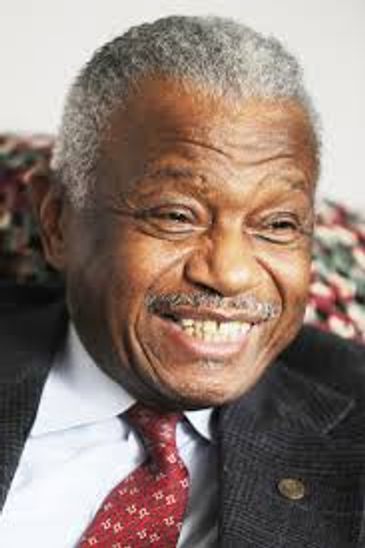
Thomas Milner 1933 -present
Milner, who still lives in Hartford, was the capital city's mayor from 1981-87, and will turn 90 later this year. Not only did he break barriers during his political career, powerful historical forces that drove the civil rights movement also propelled Milner’s accomplishments. Together, they provided Milner’s opportunity to address racia
Milner, who still lives in Hartford, was the capital city's mayor from 1981-87, and will turn 90 later this year. Not only did he break barriers during his political career, powerful historical forces that drove the civil rights movement also propelled Milner’s accomplishments. Together, they provided Milner’s opportunity to address racial injustice by gaining the levers of government power, according to a Wesleyan University historian, Hartford political powerhouse, and others who observed these dramatic events unfold firsthand.
Milner has several ties to Middletown. His parents met in the city, and his great-grandmother was a resident of Middletown. In fact, Jesse Caples, who also lived in Middletown, fought in the Revolutionary War, and later was captured and released by the British, was Milner’s great-great-great-grandfather.

Joseph Black 1924–2002)
Joseph Black 1924–2002)
Joseph Black 1924–2002)
Joseph Black - Joe Black was born on this date in 1924. He was an African American baseball player in the Negro Leagues and author. A native of Plainfield, N.J., Black graduated from Morgan State in 1950 and later received an honorary doctorate from Shaw University. Black was 28 when he reached the majors after helping the Baltimore Eli
Joseph Black - Joe Black was born on this date in 1924. He was an African American baseball player in the Negro Leagues and author. A native of Plainfield, N.J., Black graduated from Morgan State in 1950 and later received an honorary doctorate from Shaw University. Black was 28 when he reached the majors after helping the Baltimore Elite Giants of the Negro Leagues win two championships in seven years. He roomed with Robinson while with Brooklyn, pushed for a pension plan for Negro League players and was instrumental in the inclusion of players who played before 1947.
He spent a season in the minors before the Dodgers promoted him to the major leagues in 1952, five years after teammate Jackie Robinson broke baseball's color barrier. He was dominant out of the bullpen, chosen Rookie of the Year after winning 15 games and saving 15 others for the National League champions. He had a 2.15 ERA but with 142 innings pitched, fell eight innings short of winning the title. Strapped for pitching, the Dodgers brought Black out of the bullpen and started him three times in seven days in the 1952 World Series against the New York Yankees.
He won the opener with a six-hitter over Allie Reynolds, 4-2, and then lost the fourth game, 2-0, and the seventh, 4-2. The next spring after the World Series, the team urged Black to add some pitches to his strong fastball and tight curve. He lost control of his two basic pitches in the process and didn't regain his dominance until 1955, when he won 10 straight games at the start, a record at the time. After three more seasons with Brooklyn, Black drifted to Cincinnati and Washington and was out of baseball by 1958. In six seasons, he compiled a 30-12 record, half of his wins coming in his rookie season.
After his career ended, Black became an executive with Greyhound in Phoenix. In addition to lobbying for Black players, he remained in baseball through his affiliation with the commissioner's office, where he consulted with players about career choices. He wrote a syndicated column, "By The Way," for Ebony magazine and an autobiography, Ain't Nobody Better Than You. He was a board director of the Baseball Assistance Team and worked for the Arizona Diamondbacks in community relations after they joined the NL in 1998.
Joe Black, the Brooklyn Dodgers' right-hander who became the first Black pitcher to win a World Series game, died in May 2002 at the Life Care Center of Scottsdale of prostate cancer. He was 78.
Black History Spotlight — September 2024
Honoring Stevie Wonder

Stevland Hardaway Morris (/ˈstiːvˌlənd/; né Judkins; born May 13, 1950), known professionally as Stevie Wonder, is an American singer-songwriter, musician, and record producer. One of the most acclaimed and influential musicians of the 20th century, he is credited as a pioneer and influence by musicians across a range of genres that include R&B, pop, soul, gospel, funk, and jazz. A virtual one-man band, Wonder's use of synthesizers and other electronic musical instruments during the 1970s reshaped the conventions of contemporary R&B. He also helped drive such genres into the album era, crafting his LPs as cohesive and consistent, in addition to socially conscious statements with complex compositions. Blind since shortly after his birth, Wonder was a child prodigy who signed with Motown's Tamla label at the age of 11, where he was given the professional name Little Stevie Wonder.
Wonder's single "Fingertips" was a No. 1 hit on the Billboard Hot 100 in 1963, at the age of 13, making him the youngest solo artist ever to top the chart. Wonder's critical success was at its peak in the 1970s. His "classic period" began in 1972 with the releases of Music of My Mind and Talking Book, the latter featuring "Superstition", which is one of the most distinctive and famous examples of the sound of the Hohner Clavinet keyboard. His works Innervisions (1973), Fulfillingness' First Finale (1974) and Songs in the Key of Life (1976) all won the Grammy Award for Album of the Year, making him the only artist to have won the award with three consecutive album releases. Wonder began his "commercial period" in the 1980s; he achieved his biggest hits and highest level of fame, had increased album sales, charity participation, high-profile collaborations (including with Paul McCartney and Michael Jackson), political impact, and television appearances. Wonder has continued to remain active in music and political causes.
Wonder is one of the best-selling music artists of all time, with sales of over 100 million records worldwide. He has won 25 Grammy Awards (the most by a male solo artist) and one Academy Award (Best Original Song, for the 1984 film The Woman in Red). Wonder has been inducted into the Rhythm and Blues Music Hall of Fame, Rock and Roll Hall of Fame and Songwriters Hall of Fame. He is also noted for his work as an activist for political causes, including his 1980 campaign to make Martin Luther King Jr.'s birthday a federal holiday in the U.S. In 2009, he was named a United Nations Messenger of Peace, and in 2014, he was honored with the Presidential Medal of Freedom.
Black Rodeo Heritage

MISSION STATEMENT
The Bill Pickett Invitational Rodeo celebrates and honors Black Cowboys and Cowgirls and their contributions to building the west. We highlight the irrefutable global appeal of Black Cowboys and Cowgirls in the West and the stories behind a sub-culture that is still strong today. BPIR also serves as a cultural event and opportunity for families to enjoy and embrace the cowboy culture, while being educated and entertained with reenactments, history highlights, and western adventure.
VISION
The Bill Pickett Invitational Rodeo remains committed to its vision of educating people about Black Western Heritage and honoring the contributions of Black Cowboys and Cowgirls. BPIR will persist in delivering an affordable, family-friendly entertainment experience that is both educational and enjoyable, maintaining its track record of engaging audiences of all ages and backgrounds for the past 39 years.
IN CONCLUSION
The Bill Pickett Invitational Rodeo (BPIR) ensures continued engagement with a key demographic while also appealing to a wider audience. By partnering with BPIR, your corporation aligns with an established entity dedicated to educating Americans about the diverse history of the American West. This partnership offers your company an opportunity to be part of an exhilarating event that caters to audiences of all ages, cultural backgrounds, and income levels, while also allowing you to target specific regional markets within a national platform.
BPIR presents a cost-effective way for any company to engage with African-American consumers across the United States, who collectively spend nearly 1 trillion dollars annually on various consumer goods. Moreover, the Bill Pickett Invitational Rodeo reintroduces an essential aspect of Black Western Heritage into contemporary society, offering a blend of family entertainment, educational experiences, excitement, and celebration.
Chaka Khan & Reading Rainbow
After using the same iconic theme song originally sung by disco soul singer Tina Fabrique for 16 years, children’s television show Reading Rainbow replaced the beloved intro in 2001 with a new one recorded by 10-time Grammy Award winner Chaka Khan.
Reading Rainbow was on television from June 6, 1983 to November 10, 2006 and is the fourth-longest running children’s show on PBS. During its span of 21 seasons and 155 episodes, Reading Rainbow won over 200 broadcast awards, including a Peabody Award as well as 26 Emmy Awards.
Little Rock 9 History

Little Rock Nine, group of African American high-school students who challenged racial segregation in the public schools of Little Rock, Arkansas. The group—consisting of Melba Pattillo, Ernest Green, Elizabeth Eckford, Minnijean Brown, Terrence Roberts, Carlotta Walls, Jefferson Thomas, Gloria Ray, and Thelma Mothershed—became the centre of the struggle to desegregate public schools in the United States, especially in the South. The events that followed their enrollment in Little Rock Central High School provoked intense national debate about racial segregation and civil rights.
Honoring Moneeta Sleet Jr.
Honoring Moneeta Sleet Jr.
Moneta J. Sleet Jr. (February 14, 1926 – September 30, 1996) was an American press photographer best known for his work as a staff photographer for Ebony magazine. In 1969 he was awarded the Pulitzer Prize for Feature Photography for his photograph of Coretta Scott King, Martin Luther King Jr.'s widow, at her husband's funeral. Sleet was the first African-American man to win the Pulitzer, and the first African American to win the award for journalism.[1][2][3] He died of cancer in 1996 at the age of 70.[4]
George Peake's Legacy
Honoring Moneeta Sleet Jr.
Shelby J. Davidson (born: 1868 - died: 1931) Lexington, Kentucky on May 10, 1868, the son of Shelby Jeames and Amelia Scott Davidson. Having been born after Emancipation, the younger Shelby was able to take advantage of the educational opportunities in the public school system. He later traveled to Louisville and enrolled in a state university program. Dissatisfied with the scope and quality of the program, he enrolled in Howard University in 1887. Howard, at the time, was the premier academic institution for Black students. As such, Shelby had to take additional courses for two years in a preparatory program in order to get him up to speed with his colleagues.
George Peake 1722 – 1827
George Peake 1722 – 1827
George Peake 1722 – 1827
George Peake, the first known Black settler in the Cleveland area. Mr. Peake was born in Maryland and was a former resident of Pennsylvania but came to Cleveland with his wife and 2 sons in April of 1809. He was something of an inventor, developing a new hand mill for grinding grain. Peake's mill used stones that were 18-20" in diameter and that produced a much better quality of ground meal In December of 1811, Peake bought 103.5 acres of land in Rockport Township, what is now known as Rocky River. George Peake died in September 1827 at the age of 105—an extraordinarily old age both now and then!
Black History Month - Aug 2024
Honoring Inventor Lonnie Johnson
Lonnie George Johnson, inventor, first conceived the Super Soaker while doing work with the U.S. Air Force. Initially called the "Power Drencher" when it first appeared in toy shops in 1990, it eventually got its trademark name after some tweaks and remarketing.[15] Selling between $10 and $60 depending on the model, the Super Soaker took off, generating $200 million in sales in 1991.[2] Shortly after making the deal for the Super Soaker with the Larami Corporation, Larami became a subsidiary of Hasbro Inc. in February 1995.[18]
Johnson tweaked the design of the water gun, replacing the water in the Super Soaker with a "toy [Nerf] projectile."
In February 2013 Johnson filed suit against Hasbro after he discovered that he was being underpaid royalties for the Super Soaker and several Nerf toysIn November 2013, Johnson was awarded nearly $73 million in royalties from Hasbro Inc. in arbitration. According to Hasbro, the Super Soaker is approaching sales of $1 billion.[20]
Black August Commemoration

Black August is an annual commemoration and prison-based holiday to remember Black political prisoners, Black freedom struggles in the United States and beyond, and to highlight Black resistance against racial, colonial and imperialist oppression. It takes place during the entire calendar month of August.[1]
Black August was initiated by the Black Guerilla Family in San Quentin State Prison in 1979 when a group of incarcerated people came together to commemorate the deaths of brothers Jonathan P. Jackson (d. August 7, 1970) and George Jackson (d. August 21, 1971) at San Quentin State Prison.[2] [3].
March on Washington 1963

On August 28, 1963, more than a quarter million people participated in the historic March on Washington for Jobs and Freedom, gathering near the Lincoln Memorial.
More than 3,000 members of the press covered this historic march, where Rev. Dr. Martin Luther King, Jr. delivered the exalted "I Have a Dream" speech.
Originally conceived by renowned labor leader A. Phillip Randolph and Roy Wilkins, Executive Secretary of the NAACP, the March on Washington evolved into a collaborative effort amongst major civil rights groups and icons of the day.
Stemming from a rapidly growing tide of grassroots support and outrage over the nation's racial inequities, the rally drew over 260,000 people from across the nation.
Celebrated as one of the greatest — if not the greatest — speech of the 20th century, Dr. King's celebrated speech, "I Have a Dream," was carried live by television stations across the country.
Celebrating Elijah McCoy

McCoy was a Canadian American engineer of African-AmeriElijah can descent who invented lubrication systems for steam engines. Born free on the Ontario shore of Lake Erie to parents who fled enslavement in Kentucky, he traveled to the United States as a young child when his family returned in 1847, becoming a U.S. resident and citizen. His inventions and accomplishments were honored in 2012 when the United States Patent and Trademark Office named its first regional office, in Detroit, Michigan, the "Elijah J. McCoy Midwest Regional Patent Office".[3]
Honoring Nat King Cole

Charles Edward Anderson Berry (October 18, 1926 – March 18, 2017) was an American singer, guitarist and songwriter who pioneered rock and roll. Nicknamed the "Father of Rock and Roll", he refined and developed rhythm and blues into the major elements that made rock and roll distinctive with songs such as "Maybellene" (1955), "Roll Over Beethoven" (1956), "Rock and Roll Music" (1957), and "Johnny B. Goode" (1958).[1] Writing lyrics that focused on teen life and consumerism, and developing a music style that included guitar solos and showmanship, Berry was a major influence on subsequent rock music.[2]
Born into a middle-class black family in St. Louis, Berry had an interest in music from an early age and gave his first public performance at Sumner High School. While still a high school student, he was convicted of armed robbery and was sent to a reformatory, where he was held from 1944 to 1947. After his release, Berry settled into married life and worked at an automobile assembly plant. By early 1953, influenced by the guitar riffs and showmanship techniques of the blues musician T-Bone Walker, Berry began performing with the Johnnie Johnson Trio.[3] His break came when he traveled to Chicago in May 1955 and met Muddy Waters, who suggested he contact Leonard Chess, of Chess Records. With Chess, he recorded "Maybellene"—Berry's adaptation of the country song "Ida Red"—which sold over a million copies, reaching number one on Billboard magazine's rhythm and blues chart.[4]
By the end of the 1950s, Berry was an established star, with several hit records and film appearances and a lucrative touring career. He had also established his own St. Louis nightclub, Berry's Club Bandstand.[5] He was sentenced to three years in prison in January 1962 for offenses under the Mann Act—he had transported a 14-year-old girl across state lines for the purpose of having sexual intercourse.[3][6][7] After his release in 1963, Berry had several more successful songs, including "No Particular Place to Go", "You Never Can Tell", and "Nadine". However, these did not achieve the same success or lasting impact of his 1950s songs, and by the 1970s he was more in demand as a nostalgia performer, playing his past material with local backup bands of variable quality.[3] In 1972, he reached a new level of achievement when a rendition of "My Ding-a-Ling" became his only record to top the charts. His insistence on being paid in cash led in 1979 to a four-month jail sentence and community service, for tax evasion.
Nat King Cole: Musical Legend

Nathaniel Adams Coles (March 17, 1919 – February 15, 1965),[1] known professionally by his stage name Nat King Cole, was an American singer, jazz pianist, and actor. Cole's career as a jazz and pop vocalist started in the late 1930s and spanned almost three decades where he found success and recorded over 100 songs that became hits on the pop charts.
Cole started his career as a jazz pianist in the late 1930s, when he formed The King Cole Trio, which became the top-selling group (and the only black act) on Capitol Records in the 1940s. Cole's trio was the model for small jazz ensembles that followed. Starting in 1950, he transitioned to become a solo singer billed as Nat King Cole. Despite achieving mainstream success, Cole faced intense racial discrimination during his career. While not a major vocal public figure in the civil rights movement, Cole was a member of his local NAACP branch and participated in the 1963 March on Washington. He regularly performed for civil rights organizations. From 1956 to 1957, Cole hosted the NBC variety series The Nat King Cole Show, which became the first nationally broadcast television show hosted by an African American.
In September 1964, Cole began to lose weight and experienced back problems.[62] He collapsed with pain after performing at the Sands Hotel in Las Vegas. In December, Cole was working in San Francisco when he was finally persuaded by friends to seek medical help. A malignant tumor in an advanced state of growth on Cole's left lung was observed on a chest X-ray. Cole, who was a heavy cigarette smoker, had lung cancer and was expected to have only months to live.[63] Against his doctors' wishes, Cole carried on his work and made his final recordings between December 1 and 3 in San Francisco, with an orchestra conducted by Ralph Carmichael. The music was released on the album L-O-V-E shortly before Cole died.[64] His daughter noted later that he did this to assure the welfare of his family.
Cole entered Saint John's Health Center in Santa Monica on December 7, 1964, and cobalt therapy was started on December 10. Frank Sinatra performed in Cole's place at the grand opening of the new Dorothy Chandler Pavilion of the Los Angeles Music Center on December 12.[65] Cole's condition gradually worsened, but he was released from the hospital over the New Year's period. At home, Cole was able to see the hundreds of thousands of cards and letters Throughout Cole's illness, his publicists promoted the idea that he would soon be well and working, despite the private knowledge of his terminal condition. Billboard magazine reported that "Nat King Cole has successfully come through a serious operation and... the future looks bright for 'the master' to resume his career again". Cole returned to the hospital in early January 1965.
[70] On Valentine's Day, Cole and his wife briefly left St. John's to drive by the sea. Cole died at the hospital early in the morning hours of Monday, February 15, 1965, at the age of 45.[71that had been sent after news of his illness was made public. Cole's funeral was held on February 18 at St. James' Episcopal Church on Wilshire Boulevard in Los Angeles; 400 people were present inside the church, and thousands gathered outside. Hundreds of members of the public had filed past the coffin the day before.[72] Honorary pallbearers included Robert F. Kennedy, Count Basie, Frank Sinatra, Sammy Davis Jr., Johnny Mathis, George Burns, Danny Thomas, Jimmy Durante, Alan Livingston, Frankie Laine, Steve Allen, and Pat Brown, the governor of California.[73]
The eulogy was delivered by Jack Benny, who said that "Nat Cole was a man who gave so much and still had so much to give. He gave it in song, in friendship to his fellow man, devotion to his family. He was a star, a tremendous success as an entertainer, an institution. But he was an even greater success as a man, as a husband, as a father, as a friend."[73] Cole's remains were interred in Freedom Mausoleum at Forest Lawn Memorial Park, in Glendale, California.[74]
Honoring Our Leaders - July 2024
Trailblazer Michelle Howard

A 1982 Naval Academy graduate, Adm. Michelle Howard became the first black woman to command a U.S. Navy combatant ship, USS Rushmore (LSD 47) (1999). She was the first woman promoted to the rank of four-star admiral (2014). Upon her promotion, Howard became the highest ranking woman in U.S. armed forces history and the highest ranking black woman in Navy history. She served as VCNO from 2014 to 2016. Howard also became the first woman four-star admiral to command operational forces when she assumed command of both U.S. Naval Forces Europe-Naval Forces Africa and Allied Joint Forces Command Naples (NATO) from 2016 to 2017. Howard retired from the Navy in 2017, after nearly 36 years of service.
Music & Inspiration: Hazel Scott
Born in Port of Spain, Trinidad and Tobago, on June 11, 1920, Hazel Dorothy Scott was the only child of R. Thomas Scott, a West African scholar from Liverpool, England, and Alma Long Scott, a classically trained pianist, and music teacher. In 1924, the family moved from Trinidad to the United States and settled in Harlem, New York City.Her parents had separated by this time, and Scott lived with her mother and grandmother.
By now, Scott could play anything she heard on the piano. With her mother's guidance and training, she mastered advanced piano techniques and was labeled a child prodigy. When Scott was eight years old, she began studying with Professor Paul Wagner of the Juilliard School of Music. In 1933, her mother organized her own Alma Long Scott's All-Girl Jazz Band, where Scott played the piano and trumpet.
Dr. Gloria Scott: Her Impact
Dr. Gloria Scott: Her Impact
In 1961, Scott’s career began as a research associate in genetics and embryology at Indiana University Institution for Psychiatric Research. During this time, she worked as a biology instructor at Marion College until 1965, making her the first African American instructor at a predominately white college in Indianapolis, Indiana at the time. Scott held the positions as Dean of Students and Deputy Director of Upward Bound at Knoxville College in 1965 and as the Special Assistant to the President and Educational Research Planning Director at North Carolina A&T University in 1967. During her ten year tenure, Scott continued to make history by becoming the first African American National President of the Girl Scouts in 1975. She then served as the Institutional Research Planning Director at Texas Southern University for a year before becoming Vice President at Clark College in Atlanta in 1977.
After ten years at Clark College, Scott became the President of Bennett College in 1987, thus fulfilling her life’s mission to educate African American women.
Carl Lewis: Track Legend
Meredith Gourdine: Innovator
Dr. Gloria Scott: Her Impact
Frederick Carlton Lewis OLY (born July 1, 1961) is a former American track and field athlete who won nine Olympic gold medals, one Olympic silver medal, and 10 World Championships medals, including eight gold. His career spanned from 1979 to 1996, when he last won the Olympic long jump. He is one of only six Olympic athletes who won a gold medal in the same individual event in four consecutive Olympic Games. Along with USA discus thrower Al Oerter, he is one of only two Olympians to win a gold medal in the same individual event in athletics in four Olympic Games. He is currently the head track and field coach for the University of Houston.
Lewis was a dominant sprinter and long jumper who topped the world rankings in the 100 m, 200 m and long jump events frequently from 1981 to the early 1990s. He set world records in the 100 m, 4 × 100 m and 4 × 200 m relays, while his world record in the indoor long jump has stood since 1984. His 65 consecutive victories in the long jump achieved over a span of 10 years is one of the sport's longest undefeated streaks. Over the course of his athletics career, Lewis broke 10 seconds for the 100 meters fifteen times and 20 seconds for the 200 meters ten times. Lewis also long jumped over 28 feet seventy-one times.
His accomplishments have led to numerous accolades, including being voted "World Athlete of the Century" by the International Association of Athletics Federations and "Sportsman of the Century" by the International Olympic Committee, "Olympian of the Century" by Sports Illustrated and "Athlete of the Year" by Track & Field News in 1982, 1983, and 1984.
After retiring from his athletics career, Lewis became an actor and has appeared in a number of films. In 2011, he attempted to run for a seat as a Democrat in the New Jersey Senate, but was removed from the ballot due to the state's residency requirement. Lewis owns a marketing and branding company named C.L.E.G., which markets and brands products and services including his own.
Meredith Gourdine: Innovator
Meredith Gourdine: Innovator
Meredith Gourdine: Innovator
Meredith Gourdine's Scientific career
Meredith Gourdine is featured in this USPTO film from 1989. Skip to 14:10 for the start of the section on Gourdine, which includes him speaking about his work on airport fog dispersal system, his time as an Olympian, and his work in the late 1980's.
During the last three years of his Ph.D. program (1958-1960), Gourdine worked as a senior research scientist at the Jet Propulsion Laboratory.[5] After graduation, he worked for Plasmadyne Corporation and Curtis-Wright Corporation, then in 1964, he founded a research and development firm, Gourdine Laboratories, in Livingston, New Jersey.[1] In 1973 he founded Energy Innovations, a company that produced direct-energy conversion devices in Houston, Texas.[2] The companies developed engineering techniques to aid removing smoke from buildings and disperse fog from airport runways, and converting low-grade coal into inexpensive, transportable and high-voltage electrical energy.[2]
Gourdine was inducted to the Dayton, Ohio, Engineering and Science Hall of Fame in 1994,[3] was elected to the National Academy of Engineering in 1991, was a member of the Black Inventors' Hall of Fame, a member of the Army Science Board, and served as a Trustee of Cornell University.[3][1] He was an expert in Electrogasdynamics, the generation of electrical energy based on the conversion of the kinetic energy contained in a high-pressure, ionized, moving combustion gas (e.g., Ion wind).[2] He specialized in devising applications, including electric precipitator systems. He also invented the Focus Flow Heat Sink, used to cool computer chips.[5]
Gourdine was granted a total of over 30 U.S. patents.[5]
He was involved in a number of civic groups during his career, including New York Mayor Lindsay's Task Force on Air Pollution, President Lyndon Johnson's Advisory Panel on Energy, and President Richard Nixon's Task Force on Small Business[1]
Meredith Gourdine's Athletic career
At the 1952 Summer Olympics in Helsinki, while he was still an undergraduate student at Cornell, he won a silver medal for the long jump, one and a half inch short of Jerome Biffle's gold medal jump.[3][6]
Black Pioneers of Faith & Service
Effie Ellis: Pediatric Advocate

Effie O'Neal Ellis was an American pediatrician, child medical care consultant, and an activist for infant health and maternal education. Ellis was the first African American woman to hold an executive position in the American Medical Association.
Henry Lewis: Musical Trailblazer
Lewis broke racial barriers in the American field of conducting, becoming the first African American to serve as conductor and musical director of a major American orchestra (the New Jersey Symphony) in 1968, and the first African American to conduct the Metropolitan Opera, in 1972.
Samuel Gravely: Naval Trailblazer

Vice Admiral Samuel Lee Gravely Jr. began his illustrious career as a seaman apprentice at Naval Station Great Lakes, Illinois, in 1942. A native of Richmond, Virginia, Gravely would go on to be the U.S. Navy’s first African-American commander, captain, rear admiral, and vice admiral. He was commissioned in 1944 and served during World War II onboard USS PC-1264. After the war, Gravely had a brief stint in the civilian world before he was recalled to active duty in 1949. He would remain on active duty until his retirement in 1980. During the Korean War, he served onboard USS Iowa (BB-61), and later in the 1950s served on USS Toledo (CA-133) and USS Seminole (AKA-104).
Gwendolyn Brooks: Community Poet
Mae Carol Jemison is an American engineer, physician, and former NASA astronaut. She became the first African-American woman to travel into space when she served as a mission specialist aboard the Space Shuttle Endeavour in 1992
Joseph Dickson: Organ Innovator
Gwendolyn Elizabeth Brooks was an American poet, author, and teacher. Her work often dealt with the personal celebrations and struggles of ordinary people in her community. She won the Pulitzer Prize for Poetry on May 1, 1950, for Annie Allen, making her the first African American to receive a Pulitzer Prize.
Kenneth Gibson: City Leader

Joseph H. Dickinson was born in Canada in 1955 and moved to Michigan in 1870. He learned about various types of organs while working for the Clough and Warren Organ Company in Detroit in 1872. One of the organs he designed was awarded a prize at the Centennial Exposition in Philadelphia, Pennsylvania in 1876 and Dickinson was quickly hired to build organs for major customers, including the Royal Family of Portugal. Dickinson also invented a roller mechanism for the player piano which made the piano more reliable and able to play the sheet music in forward or reverse mode. After marrying Eva Gould in 1884, Dickinson formed the Dickinson-Gould Organ Company along with his father-in-law. The company manufactured reed organs and Dickinson received numerous patents for them, the last coming in 1912.
Ben Davis: Air Force Hero
Kenneth Allen Gibson was an American politician of the Democratic Party who was the 36th mayor of Newark, New Jersey from 1970 to 1986. He was the first African American mayor of a major city in the Northeastern United States.
Frederick Jones: Cool Inventor
Benjamin Oliver Davis Jr. was a United States Air Force general and commander of the World War II Tuskegee Airmen. He was the first African-American brigadier general in the USAF. On December 9, 1998, he was advanced to four-star general by President Bill Clinton.
William Barry: Postal Innovator

William Barry, born in 1841, educated in Canada and moved to Carthage, NY then to Syracuse. While living in Syracuse, he called himself an inventor, machinist and manufacturer of machines. After an unsuccessful partnership with Attorney George Hey and Matthew Dolphin in the early 1890's, Barry was issued his first mail marking machine patent on January 2, 1894. His second patent was issued in June, 1897. Information on total number of Barry cancels is unavailable. However, Raleigh was the only city in the state to use this machine. June 22: William Barry received the patent for the postmarking and cancelling machine, which is used by Post Offices around the globe, 1897
Dr. Densler: Pediatric Surgeon
Frederick McKinley Jones (1893-1961)
Dr. Densler was born in Savannah, GA, July 3, 1932, and attended the public schools of his hometown. He graduated from Alfred E. Beach High School in 1950 and was the Valedictorian of his class. Dr. Densler was the First African Pediatric Surgeon to practice in the USA (1969), the first African American to be accepted into the Surgical Section of the American Academy of the Pediatrics (1971) and the second African American to be certified in Pediatric Surgery (1976). Locally, he was the first African American to serve on the Hospital Authority of Fulton County for Northside Hospital, Atlanta, GA (1980-1988).
Frederick McKinley Jones (1893-1961)
Frederick McKinley Jones (1893-1961)
Frederick McKinley Jones (1893-1961)
Inventor Frederick McKinley Jones pioneered portable refrigeration, which earned him the nickname “King of Cool.” After a challenging childhood, Jones taught himself mechanical and electrical engineering and became one of the most notable Black inventors of the 20th century. He received more than 60 patents during his lifetime for inventing various refrigeration, sound, and automobile devices. The portable refrigeration units he developed helped the United States military transport food, medicine, and blood during World War II. With a business partner, Jones founded a company today known as Thermo King. He died in February 1961 at age 67.